
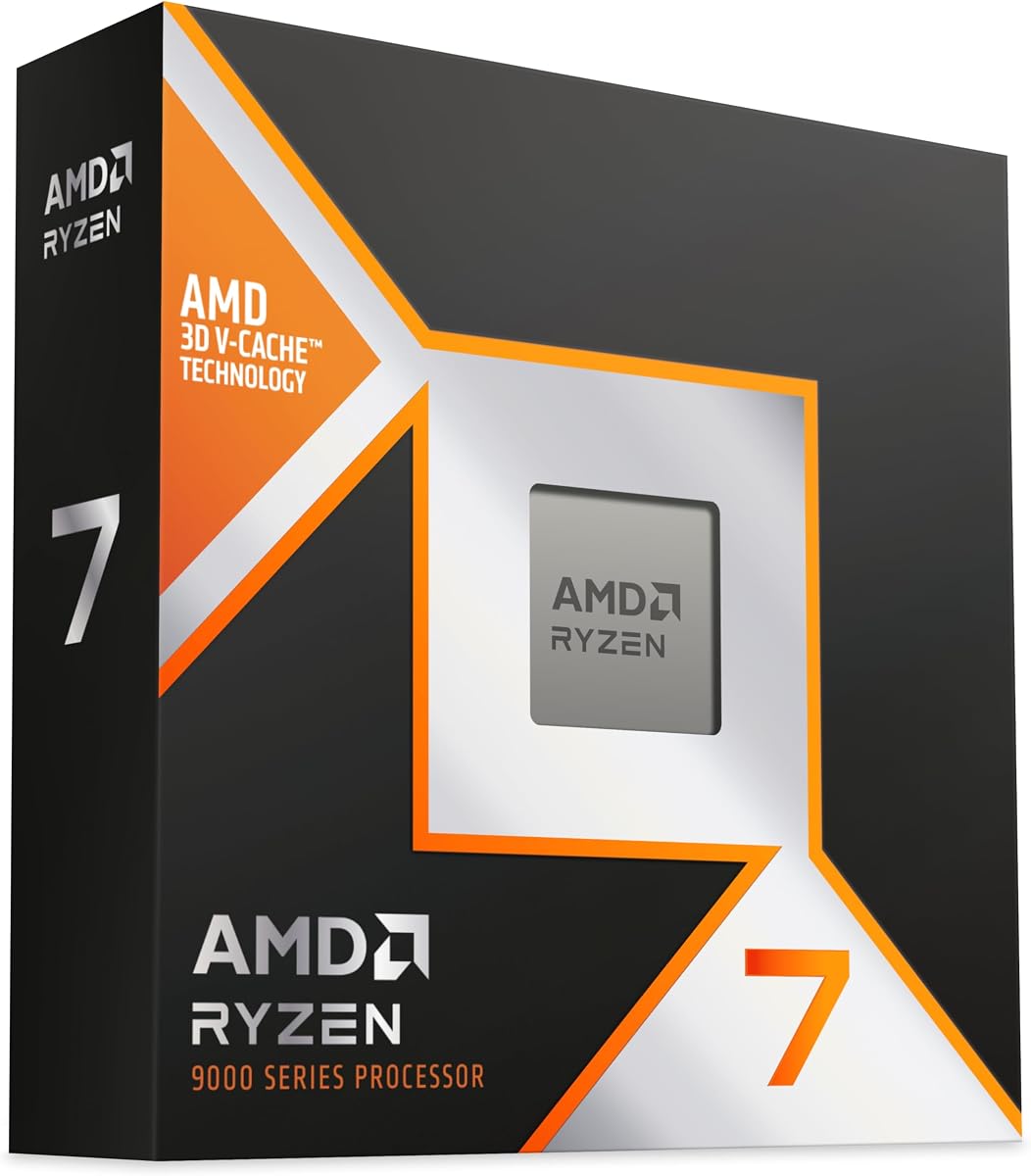
AMD RYZEN 7 9800X3D
4.8Editor score
8 cores 16 threads
96MB L3 cache
Up to 5.2GHz boost
This guide compares the top CPUs for machine learning including NVIDIA DGX Spark and AMD Ryzen models to help you choose the right processor for your AI
Choosing the right CPU for machine learning is critical for training models efficiently. Modern processors offer specialized features like large caches and unified memory to accelerate AI workloads locally.
We evaluated ten top-rated processors based on core count, architecture, memory bandwidth, and compatibility with AI software stacks. This list covers everything from entry-level desktop chips to full supercomputing units.
Each pick highlights key strengths and ideal use cases for developers. Prices and availability fluctuate frequently, so verify current details before purchasing to ensure you get the best value for your needs.
4.8Editor score

5.0Editor score

5.0Editor score
This side-by-side comparison highlights the technical specifications and key capabilities of each processor to help you quickly identify the best fit for your machine learning tasks.



The NVIDIA DGX Spark 2 Pack stands out as the premier choice for serious machine learning professionals seeking desktop supercomputer power. With a perfect 5.0 rating, it delivers enterprise scale AI capabilities right to your desk. Its Grace Blackwell architecture ensures seamless integration with the full NVIDIA AI software stack for optimal workflow efficiency.
We may earn a commission when you buy through this link, at no additional cost to you.
This system offers up to 1 petaFLOP of AI performance which accelerates time to solution for local model fine tuning and inference. You get 128GB of unified memory per unit allowing experimentation with large models up to 200 billion parameters at FP4. This capability transforms your desktop into a secure high performance testing environment.
While the performance is exceptional the cost is a significant factor to consider for smaller teams or individual developers. It requires robust infrastructure support including adequate power and cooling for continuous operation. However these trade offs are acceptable given the incredible ROI through increased productivity and innovation speed.
If you need to prototype test and validate AI models locally without relying on cloud resources this is the ultimate tool. It is ideal for enterprises or advanced researchers who demand high performance computing in a compact form factor. Invest in this for professional grade AI development and rapid iteration.
Bring data center performance to your workspace with Grace Blackwell architecture for superior AI workloads.
Test larger models locally with 128GB unified memory enabling faster iteration and validation.
We may earn a commission when you buy through this link, at no additional cost to you.
The AMD RYZEN 7 9800X3D delivers top tier performance for multi threaded tasks with its 8 cores and 16 threads. Rated 4.8 by users this processor excels in efficiency and raw speed thanks to the Zen5 technology and Next Gen 3D V-Cache. It is an excellent choice for those needing robust compute power without excessive heat generation.
We may earn a commission when you buy through this link, at no additional cost to you.
With a 96MB L3 cache it provides better thermal performance and allows for clock speeds up to 5.2GHz. This cache density is particularly beneficial for workloads that rely on quick data access. It drops right into the proven Socket AM5 infrastructure making upgrades and compatibility straightforward for many users.
One limitation is that it does not come with a cooler so you must budget for additional cooling solutions. Also it is marketed heavily for gaming which might lead some to overlook its general compute strengths. These are minor trade offs given the overall efficiency and performance gains over previous generations.
This processor is suitable for developers who need a balance between cost and performance for machine learning inference tasks. It handles general computation well and integrates easily into modern builds. Choose this if you want efficient high speed processing without enterprise pricing.
Experience significant IPC uplift and better power efficiency with the latest Zen5 technology.
Leverage 96MB L3 cache for improved thermal performance and higher clock speeds.
We may earn a commission when you buy through this link, at no additional cost to you.
The Intel Core Ultra 9 285K offers an ultra efficient desktop experience with 24 cores and 24 threads. With a 4.6 rating it prioritizes and distributes workloads using Performance Hybrid Architecture to optimize system performance. This makes it a strong contender for tasks requiring both high speed and efficient resource management.
We may earn a commission when you buy through this link, at no additional cost to you.
Its Performance Unlocked design allows for speeds up to 5.7GHz with a 40MB Cache ensuring rapid execution of complex instructions. It supports PCIe Express Version Turbo Boost Max Technology 3.0 and PCIe 5.0 and 4.0 which future proofs your system for high bandwidth needs. The system runs cooler and quieter than many traditional high power processors.
However you must purchase a thermal solution separately as none is included in the box. Compatibility is restricted to Intel 800 series chipset based motherboards which may limit build flexibility for some. These requirements are minor compared to the efficiency gains and performance optimization offered by the hybrid design.
Ideal for creators and developers who need a quieter workstation that still delivers robust compute power for machine learning inference. It is perfect for setups where power consumption and heat are primary concerns. Select this for a balanced approach to high performance desktop computing.
Prioritize workload distribution across P and E cores for better overall efficiency.
Enjoy PCIe 5.0 support for faster storage and peripheral data transfers.
We may earn a commission when you buy through this link, at no additional cost to you.
The AMD Ryzen 9 9950X3D is a 16 core processor designed for demanding gaming and content creation tasks. Rated 4.7 it combines Zen 5 architecture with impressive clock speeds up to 5.7GHz for superior single and multi threaded performance. It comes in a boxed processor form factor ready for desktop integration.
We may earn a commission when you buy through this link, at no additional cost to you.
With a max boost of 5.7GHz and a base clock of 4.3GHz this CPU handles heavy loads efficiently. The Granite Ridge AM5 platform ensures it works seamlessly with modern infrastructure for reliable performance. Its architecture is built to maximize throughput for complex workloads and data processing.
A downside is the higher price point compared to lower tier options which might limit budget builds. Also like many high end chips it does not include a cooler so you need to plan for additional cooling. These factors are outweighed by the raw performance and efficiency for professional tasks.
This chip is perfect for developers needing massive multi core power for training smaller models or data preprocessing. It delivers excellent throughput for content creation and technical computing. Opt for this if you need top tier performance and have the budget for premium hardware.
Leverage the latest AMD architecture for improved IPC and energy efficiency.
Reach clock speeds up to 5.7GHz for rapid execution of complex tasks.
We may earn a commission when you buy through this link, at no additional cost to you.
The AMD Ryzen 9 9900X offers a great balance of cores and threads with 12 cores and 24 threads. It has a 4.8 rating and delivers ultra fast performance in popular games. This unlocked desktop processor is built on AMD Zen 5 architecture for efficiency and speed.
We may earn a commission when you buy through this link, at no additional cost to you.
Its 5.6 GHz Max Boost allows for overclocking potential and it includes 76 MB cache for better data handling. The DDR5 5600 support ensures fast memory access and it can support PCIe 5.0 on select motherboards. This makes it a solid choice for future proofing your machine learning workstation.
One trade off is that you must buy a separate cooler since one is not included. Also the DDR5 only requirement means older memory kits cannot be used which adds to initial costs. These are standard for modern high performance chips and acceptable given the performance gains.
This CPU is ideal for developers who need strong multi threaded performance for data processing tasks. It handles everyday workloads and creative applications with ease. Select this for a reliable powerful processor that balances speed and efficiency well.
Push performance limits with unlocked multipliers for custom tuning.
Utilize DDR5 5600 support for faster memory data transfers.
We may earn a commission when you buy through this link, at no additional cost to you.
The AMD Ryzen 7 7800X3D provides dependable and fast execution of tasks with maximum efficiency. With a 4.8 rating it features 8 cores and 16 threads for reliable multitasking. The 5nm process technology ensures performance remains stable even under heavy workloads.
We may earn a commission when you buy through this link, at no additional cost to you.
Its 8MB L2 plus 96MB L3 cache memory provides an excellent hit rate for improved system performance. It runs at a 4.20 GHz clock speed which ensures reliable execution of instructions. It also comes with an AMD Radeon Graphics controller for amazing graphics output without a separate GPU.
While it is marketed for gaming the cache density makes it surprisingly effective for certain inference workloads. The lower boost clock speed compared to newer chips might limit some raw compute tasks. This is acceptable for those prioritizing power efficiency and integrated graphics capabilities.
This processor is suitable for developers needing a reliable machine with good cache performance for light AI tasks. It handles multitasking and daily computing with ease. Choose this for a balanced efficient chip that supports everyday productivity well.
Access data faster with 96MB L3 cache for improved performance.
Benefit from advanced 5nm technology for reliable performance and productivity.
We may earn a commission when you buy through this link, at no additional cost to you.
The AMD Ryzen AI Halo is purpose built for local AI development and inference with a perfect 5.0 rating. It features 128GB unified memory and supports up to 200B parameter models for building and running intensive workloads locally. This platform is optimized for Linux based AI development with full ROCm software support.
We may earn a commission when you buy through this link, at no additional cost to you.
It uses the Ryzen AI Max+ 395 Processor with 16 cores and 32 threads paired with Radeon 8060S graphics and a 50 TOPS NPU. It also includes 2TB M.2 SSD 10GbE LAN Wi-Fi 7 and other connectivity options. The memory bandwidth of 256 GB/s provides a shared memory pool across CPU GPU and NPU.
The primary constraint is that it runs Linux only which may limit Windows users. The price is also premium compared to standard desktop processors. These trade offs are justified by the specialized hardware and software optimization for AI tasks.
This is ideal for developers who need a dedicated AI desktop for prototyping without cloud reliance. It allows testing larger models locally with high performance. Opt for this if you need a specialized developer platform for local AI work.
Use 128GB unified memory for efficient data sharing across components.
Leverage preloaded tools and ROCm support for seamless development.
We may earn a commission when you buy through this link, at no additional cost to you.
The Intel Core i9 14900K offers a leading max clock speed of up to 6.0 GHz for rapid responsiveness. With a 4.2 rating it includes 24 cores and 32 threads for powerful multitasking. It supports both DDR4 and DDR5 platform options giving flexibility in memory choices.
We may earn a commission when you buy through this link, at no additional cost to you.
This processor delivers higher frame rates and smoother performance for demanding tasks. It is compatible with 600 series with potential BIOS update or 700 series chipset based motherboards. The integrated Intel UHD Graphics 770 provides essential display capabilities.
High power consumption and the need for BIOS updates on older boards are factors to consider. These can lead to thermal management challenges under load. This is acceptable for users who prioritize clock speed and raw performance in their build.
It is suitable for developers needing high single thread performance for compilation or specific workloads. It handles general computing tasks with ease. Select this for a balance of speed and legacy compatibility options.
Reach up to 6.0GHz for maximum performance and responsiveness.
Choose between DDR4 and DDR5 platform options for flexibility.
We may earn a commission when you buy through this link, at no additional cost to you.
The AMD Ryzen 7 9850X3D Desktop Processor is built on Zen 5 architecture for high performance. With a 4.8 rating it brings V-Cache technology to desktop workloads for better caching. It is designed as a desktop processor offering strong efficiency for computing tasks.
We may earn a commission when you buy through this link, at no additional cost to you.
It leverages V-Cache tech to improve performance in cache sensitive tasks. The Zen 5 architecture ensures better IPC and power efficiency than previous generations. This chip offers a balance between gaming and professional workloads.
Due to limited detailed specs in the data specifics like clock speeds are not fully available. It is also typical for high performance chips to exclude a cooler. These are manageable constraints given the known strengths of the architecture.
This is suitable for developers looking for high cache performance for mid range builds. It works well for general computing and development tasks. Choose this for a reliable high performance option.
Benefit from the latest Zen 5 architecture for performance and efficiency.
Leverage 3D V-Cache for improved performance and cache hit rates.
We may earn a commission when you buy through this link, at no additional cost to you.
The NVIDIA DGX Spark is a personal AI desktop supercomputer built for enterprise scale AI and high performance computing. With a 4.4 rating it delivers up to 1 petaFLOP of AI performance for local model fine tuning. It features Grace Blackwell chip and 128GB unified memory for large model support.
We may earn a commission when you buy through this link, at no additional cost to you.
Its compact energy efficient design brings supercomputer performance directly to your desk. You can develop locally and deploy anywhere with seamless integration of the full NVIDIA AI software stack. It allows experimentation with large models up to 200 billion parameters at FP4.
The system requires significant setup and a robust power supply to operate effectively. The premium pricing means it is more suitable for professional environments. These are acceptable trade offs for the incredible localized AI computing power it provides.
Ideal for organizations wanting to augment laptop or cloud resources with dedicated local compute. It is perfect for rapid testing validation and iteration on large models. Choose this for a secure high performance desktop AI environment.
Fine tune large models locally with 1 petaFLOP AI performance.
Integrate with NVIDIA AI software stack for seamless development and deployment.
We may earn a commission when you buy through this link, at no additional cost to you.
Selecting the right CPU involves weighing core count architecture cache size and memory compatibility.
Higher core counts allow more parallel processing for training tasks. Look for at least 8 cores for modern workflows.
Prioritize processors with high thread counts to handle multi threading efficiently.
Large caches reduce latency when accessing training data. 3D V-Cache technology is a plus.
Opt for higher L3 cache sizes to improve hit rates and performance.
Fast memory channels ensure data flows smoothly to the CPU. DDR5 is essential for modern builds.
Unified memory pools across CPU and GPU are valuable for local AI development.
Newer architectures like Zen 5 or Intel Ultra offer better performance per watt. This reduces heat and power costs.
Look for performance efficiency features that optimize workload distribution.
Ensure your motherboard supports the chosen socket type. AM5 and Intel 800 series are common now.
Check chipset features like PCIe 5.0 support for future upgrades.
NPUs and dedicated AI blocks help with inference workloads. NVIDIA DGX platforms integrate these heavily.
Look for processors with NPU capabilities to offload AI tasks from GPU.
High performance CPUs need adequate power supplies and cooling. Plan for efficient power delivery.
Ensure your PSU can handle peak loads without throttling.
Some systems offer specific optimization for AI frameworks. NVIDIA software stack is deeply integrated.
Choose platforms with ROCm or CUDA support to match your workflow.
Ensure proper airflow in your case to keep temperatures low under load. Use high quality thermal paste during installation.
Keep drivers updated for optimal performance and stability. This includes chipset drivers for best throughput.
Avoid overclocking without adequate cooling. Monitor temperatures using reliable software tools regularly.
A specialized CPU helps but GPU or NPU acceleration is key. Look for high core counts and large caches to support data processing effectively.
Unified memory allows CPU and GPU to share the same pool efficiently. This reduces data transfer overhead in local AI development.
Yes DDR5 provides higher bandwidth essential for moving training data quickly. It is a standard feature on modern high end processors.
Larger caches reduce latency by storing frequently accessed data close to cores. This improves speed in training loops and inference.
They offer unmatched local AI supercomputer power for enterprise workflows. They are ideal for those needing rapid prototyping without cloud costs.
High performance processors need robust air or liquid cooling. Ensure your case supports proper airflow to maintain performance.
AMD Zen 5 offers better efficiency while Intel hybrid cores offer flexibility. Match your choice to your preferred software stack.
Basic inference may work on older CPUs but efficiency drops. Newer chips handle large models with less latency.
This guide covered the top ten CPUs ranging from budget friendly options to AI supercomputers. Each offers unique strengths depending on your workload.
Focus on core count cache and memory bandwidth when prioritizing your needs. Specialized hardware like DGX is for advanced local development.
Prices and availability fluctuate frequently so check current deals before buying. Verify your build requirements match the processor capabilities.