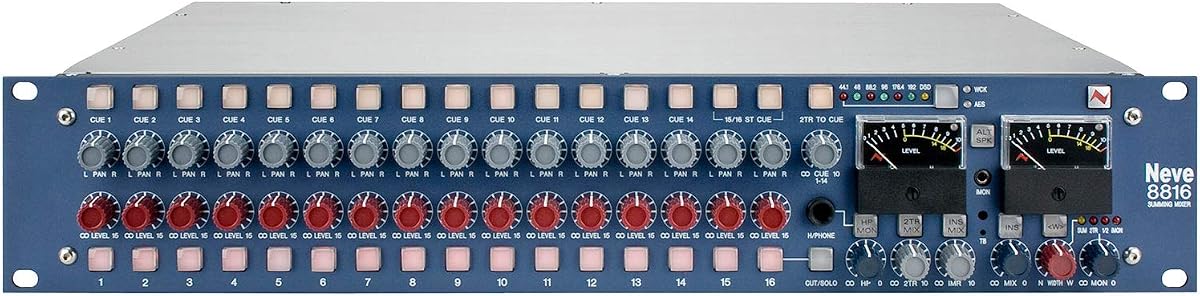
Neve 8816 Summing Mixer
16-channel summing system
Transformer-balanced analog design
Main/Alternate speaker outputs
This guide compares the top analog summing mixers for studio and DJ use, featuring transformer-balanced units and versatile 16-channel options.
Analog summing mixers are essential tools for professionals seeking to blend digital tracks with the warmth and depth of hardware processing. These devices aggregate multiple audio signals into a cohesive stereo output, often adding harmonic distortion and spatial width that software plugins struggle to replicate fully.
We evaluated ten leading models based on channel count, build quality, transformer presence, and mixing features. Our list includes high-end studio consoles, compact passive summing boxes, and versatile DJ mixers that excel at signal routing and sound shaping.
Each product entry details key specifications, standout benefits, and potential trade-offs to help you find the right unit for your workflow. Please note that market pricing fluctuates frequently, so always verify current costs on the vendor page before purchasing.


4.8Editor score
The following table provides a side-by-side overview of every model featured in this roundup, highlighting their primary channel configurations, specific use cases, and standout technical attributes.




The Neve 8816 stands as a legendary unit in the studio world, offering a 16-channel summing and monitoring system. While rated N/A, its reputation among professionals is unmatched for adding depth and glue to digital mixes.
We may earn a commission when you buy through this link, at no additional cost to you.
Its transformer-balanced design ensures high-quality signal integrity, minimizing noise while introducing the warm harmonic distortion that defines the Neve sound. The main and alternate speaker outputs provide flexible monitoring options for critical listening.
Trade-offs include the significant financial investment and the physical footprint required for a dedicated rack unit. These are acceptable for serious professionals seeking the highest fidelity and the classic sonic signature that software cannot replicate.
Studio owners and mastering engineers should choose this mixer for critical projects requiring the utmost analog character. It remains the gold standard for those prioritizing sound quality and heritage in their signal chain.
The transformer technology adds subtle saturation that binds tracks together, creating a cohesive mix with enhanced perceived loudness and warmth.
Multiple speaker outputs allow seamless switching between primary and secondary monitoring systems without needing external patching or extra hardware.
We may earn a commission when you buy through this link, at no additional cost to you.
The Radial Mix 2:1 is a simple yet effective 2-channel passive mono summing mixer. With a solid 4.8 rating, it is praised for its straightforward design and lack of power requirements.
We may earn a commission when you buy through this link, at no additional cost to you.
Its passive architecture means it draws no electricity, making it incredibly reliable for live or studio environments. It offers a clean signal path that avoids noise floor issues common with powered mixers.
The main limitation is the single mono output and limited channel count, which restricts it to specific routing tasks. However, for summing two sources like sub-mixes or vocal groups, this is rarely an issue.
Home producers and budget-conscious engineers should buy this for simple signal aggregation. It provides essential summing functionality without the complexity or cost of larger active systems.
By eliminating active components and power supplies, this unit reduces potential failure points and ensures consistent performance in various environments.
The simple design ensures that your audio signal remains as clean as possible, avoiding coloration or noise introduction from electronics.
We may earn a commission when you buy through this link, at no additional cost to you.
The Rupert Neve Designs 5059 Satellite Summing Mixer brings the coveted Shelford sound to a compact 16-channel format. While rated N/A, its engineering quality is top-tier for those seeking authentic analog character.
We may earn a commission when you buy through this link, at no additional cost to you.
The 2+2 configuration offers versatile routing options, allowing you to sum groups or combine stereo outputs with additional mono inputs. This flexibility makes it highly adaptable for complex mixing scenarios.
The cost is high, and the unit requires careful integration into a larger rack system. However, for those wanting the Neve DNA without a full console, the value proposition remains strong.
Serious home studio owners and professional engineers should consider this for premium analog summation. It bridges the gap between full consoles and smaller mixers effectively.
The 2+2 architecture lets you treat the unit as two separate summing engines or combine them for a full 16-channel summing experience.
Built to the standards of the full Shelford console, it delivers the same high-performance components in a space-efficient design.
We may earn a commission when you buy through this link, at no additional cost to you.
The Headliner R4 is a 4-channel analog rotary DJ mixer featuring a built-in filter with frequency and resonance controls. Its 4.8 rating highlights user satisfaction with its classic aesthetic and precise control.
We may earn a commission when you buy through this link, at no additional cost to you.
Alps potentiometers and a robust metal enclosure ensure smooth operation and durability. The four stereo channels support various inputs including turntables and microphones, making it adaptable for different performance needs.
The design is optimized for live performance rather than studio summing, which limits its utility for mixing static tracks. However, for dynamic sound shaping in DJ sets, it excels.
Performing DJs who prefer analog knobs should buy this unit. It offers a tactile and visually striking option that integrates well into professional setups.
The analog high pass and low pass filters allow real-time sculpting of frequencies, adding a dynamic layer to your mixes.
Generous knobs and dedicated switches provide precise adjustment, allowing for nuanced mixing without the need for digital automation.
We may earn a commission when you buy through this link, at no additional cost to you.
The Mackie Onyx Series 16-channel mixer combines analog summing with multi-track USB recording capabilities. With a 4.4 rating, it is valued for its integrated recording and high-quality Onyx mic preamps.
We may earn a commission when you buy through this link, at no additional cost to you.
It supports 96kHz recording directly to SD card or computer, making it a hybrid tool for live and studio use. The legendary Perkins EQ allows detailed shaping of every channel.
The inclusion of digital effects adds flexibility but might complicate the workflow for those seeking pure analog paths. However, this hybrid approach offers great convenience.
Live sound engineers and home recordists should choose this for all-in-one functionality. It balances traditional analog sound with modern digital connectivity effectively.
The ability to record tracks digitally while mixing through analog channels saves money on additional interfaces and streamlines production.
The sweepable midrange EQ provides tonal control comparable to high-end gear, helping you carve out space in crowded mixes.
We may earn a commission when you buy through this link, at no additional cost to you.
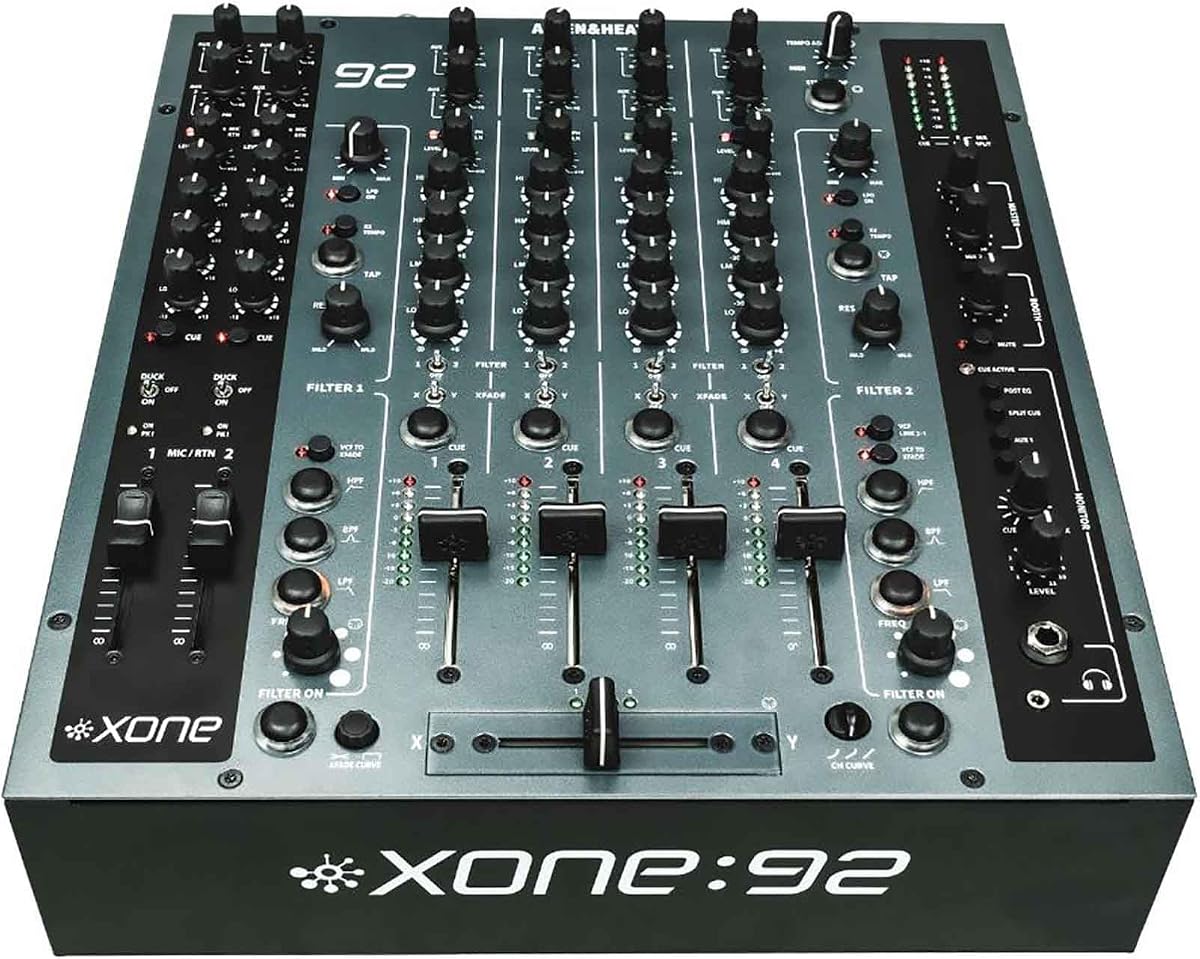
The Allen & Heath Xone:92 Mk2 is a 4-channel analog DJ mixer known for its XONE:VCF switching and multimode filters. It lacks a specific rating but maintains a reputation as a top-tier unit for enthusiasts.
We may earn a commission when you buy through this link, at no additional cost to you.
Its sound shaping capabilities are exceptional, offering two stereo aux sends and returns for external FX. The robust build and high-quality components ensure reliable performance under demanding conditions.
The learning curve is steep for newcomers due to the depth of features available. Yet, experienced users find the control over their sound unmatched by simpler units.
Professional DJs looking for maximum analog control should purchase this mixer. It represents a high standard for performance-oriented analog summing.
The multimode filters provide sweeping effects that enhance transitions and energy, essential for dynamic DJ sets.
Extensive sends and returns allow for complex setups, giving you freedom to integrate diverse external gear seamlessly.
We may earn a commission when you buy through this link, at no additional cost to you.
The Allen & Heath Xone:43 is a high-performance 4+1-channel analog DJ mixer with a perfect 5.0 rating. It includes the famous Xone VCF system and Innofader compatibility for scratchers.
We may earn a commission when you buy through this link, at no additional cost to you.
Dedicated send and return connections on each channel simplify FX integration. The booth and record outputs are essential for DJ setups requiring independent monitoring and recording.
It is more compact than larger models, which means fewer inputs for complex live mixes. However, for focused performance needs, this is a minor compromise.
DJs who value filter control and reliability should choose this model. It offers a balanced mix of features and quality at a reasonable price point.
Individual dry/wet controls for sends mean you can apply effects to specific sources without affecting the master output.
Being Innofader compatible allows you to customize the faders to your exact preference for scratching and performance.
We may earn a commission when you buy through this link, at no additional cost to you.
The Mackie 1202VLZ4 is a 12-channel compact mixer delivering exceptional sound with Onyx mic preamps. With a 4.9 rating, it is praised for its low noise and reliability in various applications.
We may earn a commission when you buy through this link, at no additional cost to you.
It offers 60dB gain range and phantom power for condenser mics, making it versatile for instruments and vocals. The distortion levels are impressively low, ensuring clean audio transmission.
Lacking USB connectivity limits direct recording to computers, requiring additional interfaces for digital work. However, for analog summing and live sound, it performs flawlessly.
Broadcast operators and small venue sound engineers should buy this mixer. It provides professional-grade features in a compact form factor at an affordable cost.
Onyx mic preamps deliver clear, high-gain signals without introducing unwanted hiss, making vocals sound natural and crisp.
The 128.5dB dynamic range and robust construction ensure the mixer handles high-volume scenarios without distortion.
We may earn a commission when you buy through this link, at no additional cost to you.
The Solid State Logic BiG SiX is a SuperAnalogue mixing console and USB interface with a perfect 5.0 rating. It offers 18-input summing and high-end processing for hybrid production.
We may earn a commission when you buy through this link, at no additional cost to you.
Its master bus compressor and 3-band EQ on every channel bring studio-quality dynamics to your stereo bus. The included USB interface simplifies connectivity with DAWs.
Physical size and cost are significant considerations for smaller studios. Yet, the sound quality and feature set justify the investment for serious producers.
Professional producers seeking a hybrid workflow should choose this console. It bridges the gap between digital convenience and analog warmth effectively.
These preamps offer the clarity and low noise typical of SSL gear, ensuring your source material remains pristine.
Built-in bus compression lets you glue the mix together without needing external plugins during the mixing process.
We may earn a commission when you buy through this link, at no additional cost to you.
The Yamaha MG10 is a 10-channel standalone mixer featuring D-PRE preamps for a natural sound. With a 4.7 rating, it is valued for its durability and simplicity in signal routing.
We may earn a commission when you buy through this link, at no additional cost to you.
Its 3-band EQ and high-pass filters help eliminate unwanted noise, resulting in a cleaner mix. The 1-Knob compressors simplify dynamics control for instruments like guitars and vocals.
While it lacks USB recording and digital effects, this simplicity ensures ease of use and reliability. It focuses purely on analog signal handling and routing.
Small venue operators and casual musicians should choose this mixer. It offers a straightforward way to manage multiple inputs with professional sound quality.
The inverted Darlington circuit in D-PRE preamps ensures warm, natural tones that avoid harshness in high frequencies.
Single-knob compressors let you add punch and control to individual channels without needing technical knowledge.
We may earn a commission when you buy through this link, at no additional cost to you.
Selecting the right mixer depends on your specific workflow, budget, and desired sound characteristics. Here are the key factors to consider before making a decision.
Channel count dictates how many sources you can sum simultaneously. Consider whether you need a simple 2-channel summing box or a 16-channel console. Routing options like sends and returns allow for external effects integration.
Prioritize channel count based on the maximum number of sources you plan to combine regularly to avoid needing multiple units later.
Transformers add harmonic distortion and warmth, ideal for classic analog tones. Solid state designs are cleaner and more linear. The choice depends on whether you want coloration or transparency.
Choose transformers if you seek the vintage sound character; otherwise, solid state ensures a transparent signal path.
Verify that the mixer supports your source gear. Some models focus on phono inputs for turntables while others offer balanced XLR inputs for microphones. Ensure compatibility with line, mic, and instrument levels.
Confirm input types match your studio setup to prevent the need for adapters or additional equipment.
Rugged enclosures and metal chassis ensure durability during transport. Check for high-quality potentiometers and connectors to avoid signal loss. A sturdy build guarantees long-term reliability.
Invest in a mixer with a solid metal frame and premium hardware for consistent performance.
Look for headphone outputs, alternate speaker outputs, and booth controls. These features allow for seamless switching and monitoring during sessions. Good monitoring is essential for accurate mixing.
Select a unit with dedicated headphone and speaker outputs to manage your monitoring environment effectively.
Some mixers include USB recording or SD card interfaces. If you need to capture your analog mix digitally, verify the included interface quality and supported sample rates.
Check digital features only if you plan to record your output directly without an external interface.
Prices range widely from budget-friendly options to premium consoles. Balance your budget with the features you truly need. Sometimes a simpler unit offers better value than an overly complex one.
Determine your budget and prioritize essential features over unnecessary extras to ensure the best return on investment.
Consider the physical dimensions of the unit. Large consoles require rack space or desk area. Compact units fit into smaller setups but may have fewer inputs.
Measure your workspace to ensure the mixer fits comfortably before purchasing.
Connect your sources to the appropriate inputs using balanced cables to reduce noise. Ensure all levels are set correctly to avoid clipping before routing audio to the main outputs.
Regularly clean knobs and faders with compressed air to prevent dust buildup that affects signal flow. Store the unit in a dry environment to protect internal components from humidity.
Perform periodic checks on connections and cables to ensure reliable operation. Updating firmware on digital units keeps performance optimal and prevents technical issues.
No, you do not need a DAW. Analog mixers work independently to combine signals. A DAW is only required if you need to record the mixed output digitally.
Transformer-balanced designs add warmth and harmonic saturation to the sound. They also improve noise rejection, resulting in cleaner audio during live or studio sessions.
Yes, many modern mixers include USB interfaces for direct connection to digital audio software. Check if your model supports USB recording to integrate with your DAW seamlessly.
Analog mixers offer tactile control and a distinct sonic character that digital emulations cannot always replicate. They are also simpler to operate without requiring screen navigation.
Keep cables short and use high-quality connectors to reduce interference. Ensure your source levels are sufficient to drive the passive mixer without significant signal loss.
Phantom power is only necessary if you use condenser microphones. Dynamic mics do not require it, so you can turn it off to avoid potential issues with incompatible gear.
We have reviewed ten top analog summing mixers, ranging from the iconic Neve 8816 to the versatile Mackie Onyx. Each unit offers unique advantages depending on your workflow and budget requirements.
Prioritize build quality and channel count to ensure the mixer meets your current needs. Features like filters and USB connectivity can significantly enhance your mixing experience and flexibility.
Always check current availability and prices as they fluctuate regularly. Selecting the right unit will elevate your audio production by adding warmth and precision to your sound.