
EBOOT 30 Pieces Photoresistor
4.6Editor score
30 pieces included
5mm GM5539 resistor
High sensitivity range
This guide compares the top light sensors for Arduino projects to help you choose the right module for brightness detection and automation control.
Light sensors are essential components for any Arduino project involving automation or environmental monitoring. They allow your microcontroller to detect ambient light levels and trigger actions accordingly. Choosing the right sensor ensures accurate readings and reliable performance in your specific application.
We evaluated ten top-rated light sensor modules based on accuracy, ease of use, and compatibility with popular boards. Each product offers unique features ranging from simple photoresistors to advanced digital modules. Our comparison highlights the strengths and weaknesses of each option for your next build.
Every review includes detailed specs, pros and cons, and real-world application notes to guide your decision. Prices and availability may change frequently so always check the latest offers before purchasing. These picks represent the best value and performance available for hobbyists and professionals alike.
4.6Editor score
4.7Editor score
5.0Editor score
This side-by-side comparison table outlines the key specifications and features of each light sensor module to help you make an informed decision for your Arduino project.


The WWZMDiB 6 Pcs LDR kit stands out as a top contender for beginners looking to add light detection to their projects. With a solid rating and robust construction this module combines a photoresistor with an LM393 comparator to deliver reliable digital switching.
We may earn a commission when you buy through this link, at no additional cost to you.
Its standout feature is the built-in potentiometer which allows you to tweak the brightness threshold without changing code. This flexibility makes it ideal for prototyping or testing different light levels. The module outputs clean signals that are easy for microcontrollers to read.
While the board size is larger than some integrated chips the trade-off is worth it for the simplicity it offers. You get both analog and digital outputs giving you options for your wiring. Some users note the potentiometer can feel a bit loose with heavy handling.
This kit is perfect for students or hobbyists needing multiple sensors for class projects or small automation tasks. If you want a plug-and-play solution that works across different voltages this is a strong choice to consider for your next build.
The potentiometer allows quick calibration of light sensitivity without needing to upload new code to your board.
The LM393 comparator ensures a stable digital output that reduces noise interference in your sensor readings.
We may earn a commission when you buy through this link, at no additional cost to you.
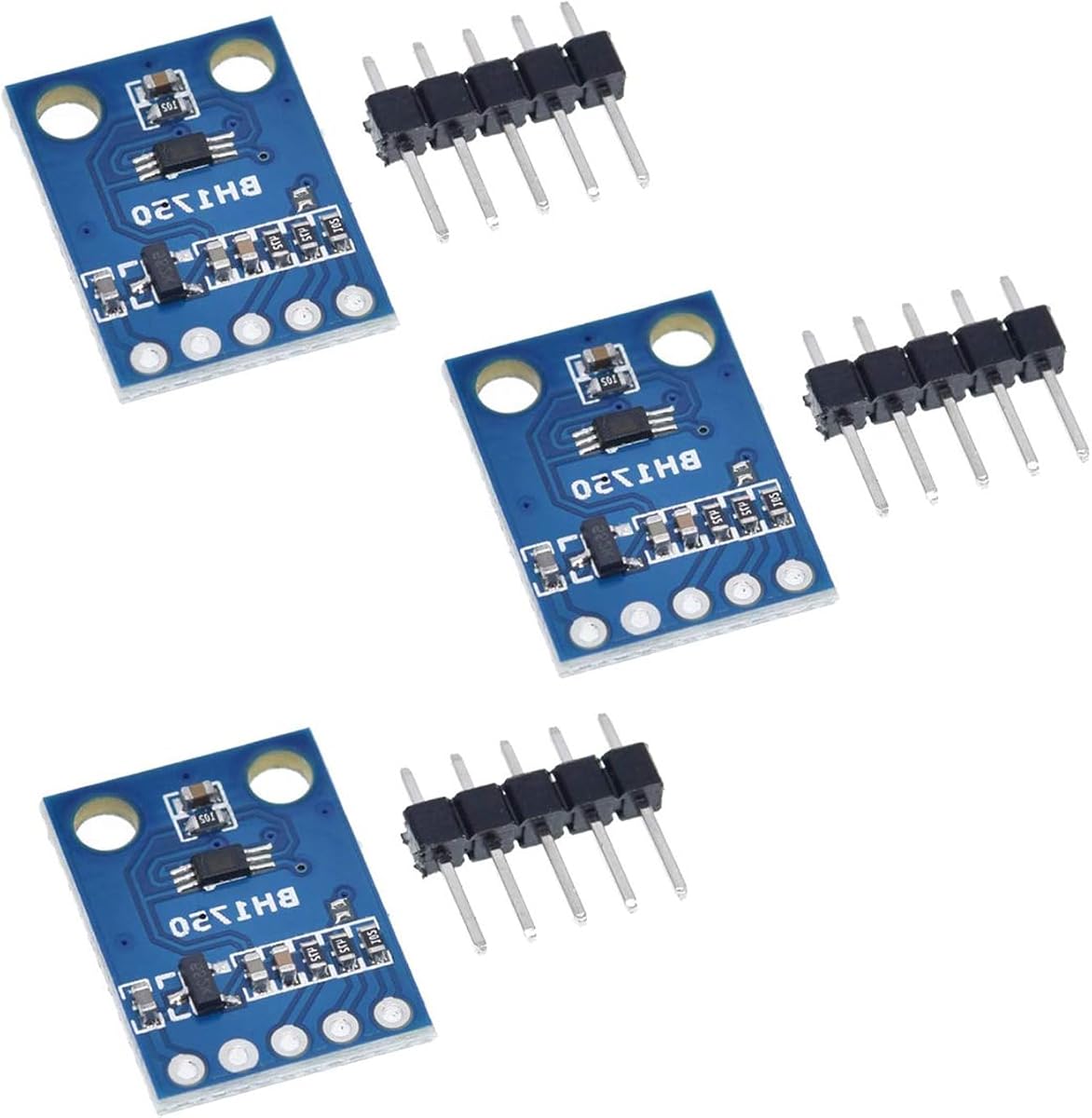
The 3-Pack GY-302 BH1750 is a favorite among developers who need accurate light intensity measurements rather than simple on-off detection. It uses a high-quality BH1750FVI chip from ROHM which is known for precise analog to digital conversion.
We may earn a commission when you buy through this link, at no additional cost to you.
This module communicates via the I2C protocol which means it only needs two data pins to connect to your microcontroller. It returns light levels in Lux allowing for nuanced control like adjusting display brightness based on room conditions. The compact size makes it easy to fit in tight enclosures.
The main trade-off is the requirement for specific libraries to read the data since it does not output raw analog voltage. However most platforms have well-maintained libraries that make integration straightforward. The digital signal also reduces noise compared to analog photoresistors.
Ideal for home automation or weather station projects this sensor provides reliable data over time. The 3-pack ensures you have backups or can monitor multiple zones. If accuracy is your priority this module delivers professional results for a hobbyist price.
The BH1750 chip converts light levels into Lux values providing precise data for automation triggers.
Using I2C saves analog pins on your board allowing you to add other sensors simultaneously.
We may earn a commission when you buy through this link, at no additional cost to you.
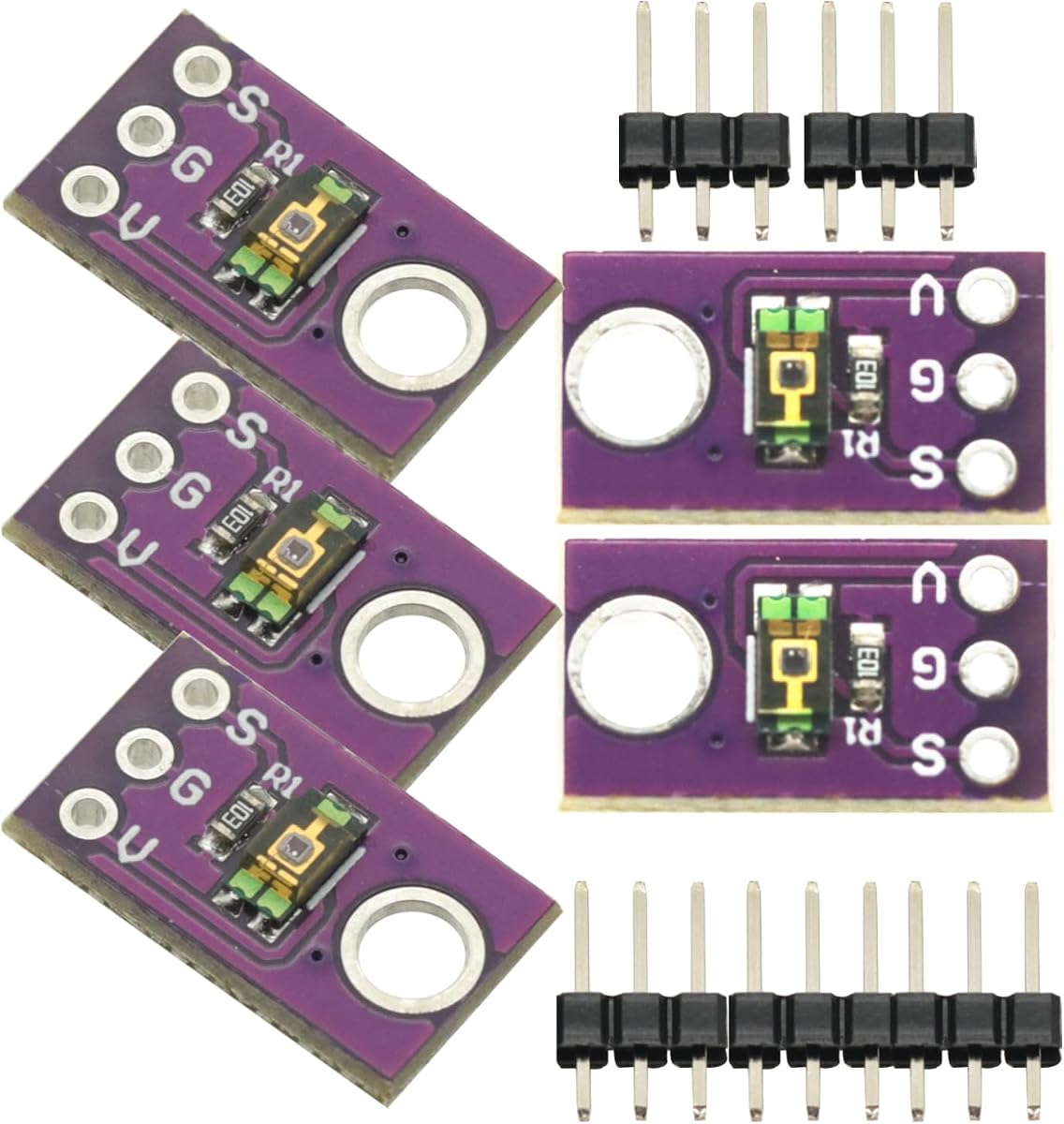
The TEMT6000 module is a professional-grade sensor designed specifically for ambient light detection in demanding environments. It holds a perfect 5.0 rating from users who rely on its stability and precision for critical tasks like display backlight dimming.
We may earn a commission when you buy through this link, at no additional cost to you.
This sensor is optimized to mimic human eye sensitivity which makes it ideal for user interfaces that need to adjust to surrounding light naturally. It is commonly used in industrial settings or high-end consumer electronics where consistent performance is non-negotiable. The module output is linear and easy to calibrate.
While it comes at a slightly higher price point than standard photoresistors the accuracy and reliability justify the investment. You get a 5-pack which is excellent for production runs or building a fleet of identical devices. Some may find the focus on backlight dimming too specific for simple projects.
If you are building a commercial product or a device that requires consistent light adaptation this is the top choice. Its proven track record and precise readings make it the premium option for serious developers. The high satisfaction rate confirms its quality.
The spectral sensitivity matches human vision making it perfect for user-facing display brightness adjustments.
Designed for industrial control this sensor maintains accuracy even under varying voltage or temperature conditions.
We may earn a commission when you buy through this link, at no additional cost to you.
HiLetgo is a reputable brand in the maker community and their 3pcs GY-302 pack offers a solid alternative to other digital light modules. It features the original BH1750FVI chip ensuring you get reliable performance without the noise issues common with cheap clones.
We may earn a commission when you buy through this link, at no additional cost to you.
The board is compact which makes it easy to integrate into tight spaces on a breadboard or custom PCB. It uses the I2C protocol requiring minimal wiring and offering precise digital readings in Lux. This makes it a reliable choice for smart home automation.
One thing to note is that sometimes the connection headers come un-soldered requiring a bit of assembly work. But this is a minor hurdle for the value you get. The 3-pack provides plenty of sensors for multiple projects or for sharing with friends and classmates.
This module is best for those who want digital precision without paying a premium price. It bridges the gap between cheap analog sensors and expensive industrial modules. With good community support you will find plenty of tutorials to get started quickly.
Using the original ROHM chip guarantees the accuracy and range specifications are met consistently.
The small board size allows placement in tight enclosures where larger modules would not fit.
We may earn a commission when you buy through this link, at no additional cost to you.
This photodiode sensor module is distinct because it focuses on directional light detection rather than general ambient light. The photodiode element is oriented to sense light primarily from the front which helps in applications like light seeking robots or line following.
We may earn a commission when you buy through this link, at no additional cost to you.
The module includes both digital and analog outputs giving you flexibility in how you interpret the signal. The digital output switches cleanly when light crosses a threshold set by the blue potentiometer. This is useful for triggering alarms or activating relays.
With ten pieces included you have a large supply for building arrays or replacing sensors in multiple units. The board also includes bolt holes for secure mounting which is a nice touch for industrial or permanent installs. The sensitivity can be adjusted on the fly.
This module is a great choice if you need to detect a specific light source like a laser pointer or a bright bulb. It filters out some ambient noise thanks to its directional design. Just be aware that you will need to aim it correctly for best results.
The module only senses light directly in front making it perfect for focused beam detection tasks.
Fixed bolt holes allow the module to be screwed onto a surface for vibration-resistant installations.
We may earn a commission when you buy through this link, at no additional cost to you.
If you are looking for raw components rather than pre-made modules this 30-piece pack from EBOOT is an excellent choice. These are standard 5mm photoresistors that require you to build the circuit yourself with a resistor to form a voltage divider.
We may earn a commission when you buy through this link, at no additional cost to you.
The 5539 model has a spectral peak at 540nm which means it responds well to visible light. They are robust enough to handle up to 150V and operate in a wide temperature range. This makes them versatile for many different environments.
The main downside is the lack of a module so you must design your own circuit. This is ideal for advanced users who want full control over the circuit or for teaching electronics principles. It saves space compared to a module on a PCB.
With thirty pieces you can outfit a whole classroom or build a large array of sensors. It is the most cost-effective way to buy light sensors if you have the skills to wire them. For simple detection tasks this basic component works perfectly.
Without a module you can place the sensor anywhere on your circuit board without board constraints.
These resistors are great for teaching voltage divider circuits and analog reading concepts to students.
We may earn a commission when you buy through this link, at no additional cost to you.
Teyleten Robot offers a straightforward module that focuses on clean digital switching. It uses the LM393 comparator which ensures a stable high or low signal once the light crosses your set threshold. This simplicity reduces the chance of noise errors in your code.
We may earn a commission when you buy through this link, at no additional cost to you.
The module outputs a TTL level signal that connects directly to your microcontroller input. You do not need extra level shifters which simplifies the wiring. The threshold is adjustable via a small potentiometer allowing you to tweak sensitivity for your environment.
With ten pieces you have enough for large scale projects or for spares. It is particularly useful for light-operated switches that trigger relays directly. The compact footprint makes it easier to fit on crowded boards than larger boards.
This is a solid choice for automation tasks where a simple on-off signal is all you need. The logic is reliable and easy to implement with any language. If you need volume without complexity this pack serves well.
The TTL output allows direct connection to Arduino pins without needing additional circuitry.
The LM393 chip ensures sharp transitions between high and low states for reliable triggers.
We may earn a commission when you buy through this link, at no additional cost to you.
This digital light sensor is built to work with a wide range of microcontrollers including the popular ESP32 and ESP8266. It handles both 3.3V and 5V logic which makes it versatile for mixing components in one project. The module is straightforward with clear output pins.
We may earn a commission when you buy through this link, at no additional cost to you.
It provides both a digital output for threshold detection and an analog output for raw readings. The threshold is set by a potentiometer on the board which allows quick changes without code. This dual output is helpful for prototyping different detection methods.
While the pack size is only four pieces it is enough for a few projects. It is marketed for Arduino and Raspberry Pi which means it fits well into standard maker workflows. The build quality is consistent with other generic modules.
If you are working with 3.3V boards like ESP8266 this module avoids the risk of voltage damage. It simplifies your design by providing a stable sensor interface. For small projects needing multi-platform support this is a safe buy.
Supporting 3.3V and 5V allows compatibility with both modern ESP boards and classic Arduinos.
Having both analog and digital outputs gives you flexibility for different logic requirements.
We may earn a commission when you buy through this link, at no additional cost to you.
With fifty pieces this pack offers the largest quantity of components for those building arrays or stocking up. The GL5516 model is a standard photoresistor with clear resistance values in bright and dark conditions. This predictability makes it easy to design circuits around.
We may earn a commission when you buy through this link, at no additional cost to you.
It is highly rated by users who value the reliability and consistency of the parts. The resistance drop from 0.2MOhm in the dark to 10Kohm in light provides a strong signal range for analog input. This range is sufficient for most detection thresholds.
Like other raw components you need to add an external resistor to read the voltage change. This offers design flexibility but requires more knowledge. It is ideal for advanced hobbyists or classroom sets where many students need supplies.
For large scale light sensing or educational purposes this bulk pack is unmatched in value. It ensures you never run out of parts mid-project. The high satisfaction rate suggests these parts perform as expected.
The wide resistance range between light and dark conditions provides a strong analog signal for microcontrollers.
Buying fifty units at once reduces the cost per sensor significantly compared to buying smaller packs.
We may earn a commission when you buy through this link, at no additional cost to you.
This module is explicitly marketed for smart car projects making it a strong candidate for automotive light detection. It uses a wide voltage LM393 comparator that remains stable even if the power supply fluctuates. This stability is critical for vehicle installations.
We may earn a commission when you buy through this link, at no additional cost to you.
The module provides both digital and analog outputs allowing you to choose how to process the light data. The digital output can trigger headlights automatically based on ambient light levels. The analog output can be used for dimming displays.
It is compatible with most microcontrollers which gives you freedom in choosing your controller. The three-pack is enough to experiment with placement or to replace sensors. The design is utilitarian focusing on function over looks.
If you are working on a car project this module is built to handle the electrical environment. It offers a reliable solution for automatic lighting control. The stability and dual output options make it a versatile choice.
The comparator chip is chosen for its stability under voltage fluctuations typical in automotive systems.
The digital output is suitable for triggering headlight relays in automatic driving assist projects.
We may earn a commission when you buy through this link, at no additional cost to you.
Selecting the right light sensor depends on your specific project needs such as precision required voltage levels and output type. Here are the key factors to consider.
There are two main types of light sensors: photoresistors and photodiodes. Photoresistors are simple analog components that change resistance with light intensity. Photodiodes offer faster response times and better accuracy. Choose based on whether you need simple threshold detection or precise light measurement.
Photoresistors are cheaper and easier to wire while photodiodes provide more reliable data for automation.
Check if the sensor provides analog or digital output. Analog sensors give a range of values allowing for nuanced control like dimming. Digital sensors provide a simple on-off signal which is easier to read. Some modules offer both which adds flexibility to your design.
Analog output is better for variable light control while digital is best for simple triggers.
Ensure the sensor works with your microcontroller voltage. Common modules work at 3.3V or 5V but mixing them can damage your board. Check the datasheet to confirm the supply voltage range and output logic levels before connecting. Using a level shifter may be necessary if mismatched.
Always verify the working voltage to prevent hardware damage to your Arduino or ESP32.
Modules like BH1750 use I2C which saves analog pins and reduces noise. Others use simple analog voltage dividers which are faster to wire but occupy an analog pin. Consider your pin count and noise environment when choosing the interface type for your board.
Digital protocols like I2C are recommended for complex projects to save pins and improve signal quality.
Some modules include a potentiometer to adjust the brightness threshold manually. This is useful for quick setup without code changes. Others require software configuration for sensitivity. If you need physical adjustments on the fly look for a potentiometer.
Modules with pots offer easier calibration for different lighting environments.
Physical size and mounting options vary between modules. Some include screw holes for secure installation while others are small breakout boards. Consider where you will place the sensor and if it needs to be secured against vibration or movement.
Look for mounting holes if the sensor will be in a moving or industrial environment.
Buy in packs if you plan to build multiple projects or need backups. Individual modules can be expensive over time. A pack of ten offers better value and ensures you have spares. Check the price per unit before deciding on a bundle.
Bulk packs reduce overall costs and ensure you have spare sensors for prototyping.
Good documentation helps you set up the sensor quickly. Modules with well-supported libraries save time and effort. Check online forums for community support and example code before buying. Poor documentation can lead to frustration and wasted time.
Prioritize sensors with active libraries and clear guides for your development platform.
Begin by wiring the sensor to your Arduino following the pinout diagram provided with the module. Connect the VCC pin to power and GND to ground. If using analog output connect the AO pin to an analog input on your board. For digital output connect DO to a digital pin.
Download the appropriate library for your sensor from the Arduino IDE library manager. Many digital sensors like BH1750 require specific libraries to read data correctly. Upload a sample sketch to test the readings. Verify that the output changes when you cover or expose the sensor.
For long-term use avoid exposing the sensor to extreme temperatures or moisture unless rated for it. Clean the sensor surface gently with a soft cloth to remove dust that could affect readings. Store unused modules in a dry place to prevent oxidation of the pins.
A photoresistor changes resistance based on light intensity and is typically analog. A photodiode generates current proportional to light and offers faster response. Photoresistors are simpler for basic detection while photodiodes are better for precision.
Yes most modules support both 3.3V and 5V logic making them compatible with ESP32. Just verify the voltage range before connecting. Some modules are specifically marketed for ESP32 support.
Modules with built-in chips like BH1750 need a library to interpret the data. Simple analog photoresistors do not need libraries and use standard analogRead functions. Check the product description to confirm requirements.
This usually indicates a wiring error or power issue. Check that VCC and GND are connected correctly. Ensure the sensor is exposed to light. If using a digital sensor check if the output is set to high or low state correctly.
If the module has a potentiometer turn it while in your environment to set the threshold. For digital modules you can change the threshold value in your code. Test by covering the sensor and adjusting until the output switches.
Most standard modules can detect sunlight but may saturate in direct sun. Industrial sensors like TEMT6000 handle high lux levels better. Check the lux range specifications to ensure they fit your application.
If the sensor output voltage matches your microcontroller voltage you do not need a level shifter. Most modules designed for Arduino output 5V or 3.3V compatible signals. Check the output voltage in the datasheet.
Solid-state light sensors generally last for years under normal conditions. They are durable but exposure to moisture or extreme heat can degrade performance. Proper wiring and storage extend their lifespan significantly.
We have reviewed ten top options ranging from simple photoresistors to advanced digital modules. Each sensor has unique strengths depending on your project complexity and needs. The GY-302 offers the best balance of accuracy and ease of use for most hobbyists.
If you are just starting try the EBOOT photoresistor pack for its affordability and simplicity. For professional projects the TEMT6000 delivers unmatched precision. Always consider your power supply and interface requirements before making a final selection.
Remember that prices and stock levels fluctuate daily so verify current availability before ordering. Keep an eye on bundle deals that offer better value. With the right sensor your automation projects will be more responsive and reliable.