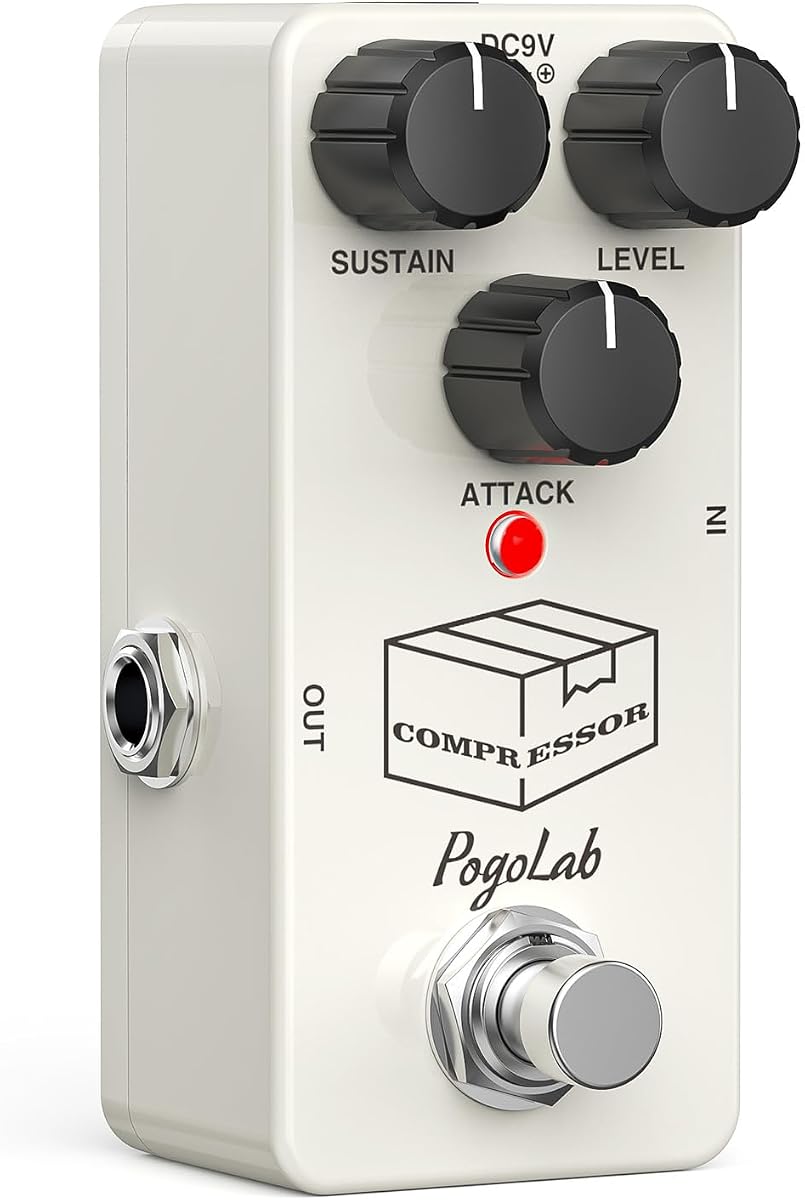
Pogolab Compressor Pedal
4.2Editor score
Noise Reduction Circuit
Separate Attack Controls
Durable Aluminum Build
This guide compares the top bass compressor pedals for tone clarity and dynamics helping players choose the right pedal for their setup and budget needs today.
Finding the right bass compressor pedal can transform your low end from muddy to defined. A good unit smooths dynamics without squashing tone. It keeps your signal consistent across different playing styles and venues.
We evaluated ten highly rated pedals based on circuit design and transparency. Each model offers unique features for studio or live use. Our list covers options ranging from classic designs to modern digital processing units.
Every pick shows specific strengths like noise floor and control layout. Prices may fluctuate so check current listings before buying. We focus on value and performance to help you find the perfect fit.
4.2Editor score

4.6Editor score

4.7Editor score
This side by side comparison highlights key specs and features for all ten models. See how each pedal handles dynamics and tone shaping in a quick reference format.


The MXR Bass Compressor stands out as a top pick for its clarity and dynamic range. It uses Constant Headroom Technology to ensure your low end stays tight. The transparent design allows your natural tone to shine through without coloration.
We may earn a commission when you buy through this link, at no additional cost to you.
Its ten gain-reduction status LEDs provide clear feedback on compression levels. This helps players dial in the exact amount of sustain they need. The true bypass switching keeps the signal path clean when the effect is off.
While it lacks a blend control, the simple dial setup makes it easy to use. The threshold is well defined so you can avoid over-compression. This trade-off is acceptable for players who want straightforward performance.
Bassists seeking a reliable unit for studio or live use should consider this model. It balances price and performance effectively. The consistent output makes it a great choice for any rig.
This tech ensures clear performance even at high signal levels. It prevents distortion while maintaining headroom for punchy dynamics.
The gain-reduction LEDs show compression in real time. This visual aid helps you tweak settings quickly during rehearsals.
We may earn a commission when you buy through this link, at no additional cost to you.
The BOSS BC-1X features intelligent circuitry that adapts to your playing nuances. It provides natural compression that preserves the fundamental bass tone. The interactive internal processing simplifies complex multiband settings into easy controls.
We may earn a commission when you buy through this link, at no additional cost to you.
With professional 18-volt input electronics, it ensures ample headroom for any bass. The high-resolution gain reduction indicator shows compression levels at a glance. Digital circuitry reduces noise significantly compared to standard compressors.
Players who prefer analog warmth might find the digital approach less organic. The controls are straightforward but limit deep tweaking. These are minor issues given the unit’s advanced features.
Bassists wanting sophisticated compression without complex setups will love this pedal. It is ideal for modern rigs. The clean sound supports a wide range of genres.
The circuitry detects register changes automatically. This means consistent compression across low and high notes without manual tweaking.
Digital processing greatly reduces common noise issues. This ensures a quiet operation even in silent passages.
We may earn a commission when you buy through this link, at no additional cost to you.
The Boss CS-3 offers a compact design with high-quality circuitry. It compresses loud signals and boosts softer ones for a smooth sound. Onboard controls allow precise tonal shaping via level, tone, and attack.
We may earn a commission when you buy through this link, at no additional cost to you.
Its low-noise design ensures super-quiet operation during performance. The manufacturer includes a five-year warranty with purchase. This reliability makes it a solid choice for touring musicians.
The feature set is simpler than modern units so deep tweaking is limited. Sustain control is basic but effective for general use. These limitations are acceptable for its price and size.
Guitarists and bassists needing a reliable compact pedal should consider this. It fits easily on crowded boards. The smooth sound works well for various styles.
Its small design saves space on pedalboards. This is great for players with limited room.
Tone and level controls refine the sound easily. This adds versatility despite the small size.
We may earn a commission when you buy through this link, at no additional cost to you.
The MXR M87 Bundle provides recording-quality compression with a complete accessory set. The Bass Compressor keeps your low end tight using Constant Headroom Technology. True bypass switching maintains signal integrity throughout the chain.
We may earn a commission when you buy through this link, at no additional cost to you.
Ten gain-reduction status LEDs clearly indicate the threshold. The bundle includes a Tonebird power supply and high-quality cables. This setup is convenient for new players needing everything at once.
The pedal alone costs the same as standalone versions so the value depends on accessories. The extra cables add bulk but save time. These factors are minor compared to the convenience offered.
Bassists buying a first pedal will appreciate this all-in-one kit. It reduces setup hassles significantly. The clean tone ensures professional results from day one.
The bundle includes power and patch cables. This saves time and money for new setups.
Constant Headroom Technology keeps low end clean. This ensures a professional sound for recordings.
We may earn a commission when you buy through this link, at no additional cost to you.
The Keeley Bassist delivers high-fidelity compression built around the THAT Corp 4320 chip. It acts as a compressor and limiting amplifier in one box. The design uses high-performance voltage controlled amplifiers and op-amps.
We may earn a commission when you buy through this link, at no additional cost to you.
Its bandwidth exceeds 20 KHz ensuring low noise and full detail. The pedal handles large signals with incredible bandwidth. No detail in your bass guitar tone is lost during compression.
The price is higher than budget units which may deter some. Beginners might find the controls complex initially. These are acceptable trade-offs for the studio-quality performance.
Producers and serious players seeking studio sound will love this pedal. It ensures pristine tone at any volume. The reliability makes it ideal for professional environments.
This chip provides exotic high fidelity. It ensures studio-quality sound in a pedal format.
It handles large signals without distortion. The bandwidth preserves every nuance of your tone.
We may earn a commission when you buy through this link, at no additional cost to you.
The Pogolab Compressor Pedal offers quiet performance with noise reduction code. Separate controls allow adjustment of compression time and starting point. The aluminum alloy construction ensures durability and longevity.
We may earn a commission when you buy through this link, at no additional cost to you.
True bypass switching keeps the signal intact when off. An indicator light clearly shows the working state. This design supports active pickups and bass easily.
The power adapter is not included which adds a small cost. The circuit is simpler than high-end units. These minor issues do not detract from its value.
Budget-conscious players looking for a reliable option should choose this. It delivers clean compression for minimal cost. The build quality supports daily use.
Noise reduction code minimizes swells. This ensures a clean signal chain.
Attack and sustain are separate. This allows precise adjustment for different instruments.
We may earn a commission when you buy through this link, at no additional cost to you.
The Electro-Harmonix Bass Preacher features input sensitivity from -10 dBu to +2 dBu. It works perfectly for passive and active basses with varying output. Maximum gain reduction reaches 21 dB with sufficient make-up gain.
We may earn a commission when you buy through this link, at no additional cost to you.
An attack toggle switch offers three timing settings for compression onset. True bypass ensures maximum signal path integrity. A 9V battery is included for immediate use.
Battery life may be short if always on without switch. The attack is less precise than dedicated dials. These are common in this price range.
Players needing flexibility across different bass types will benefit. It offers strong sustain without complexity. The included battery makes setup instant.
The range fits various basses well. This ensures compatibility without extra gear.
Up to 21 dB reduction returns full volume. This ensures consistent levels during sustain.
We may earn a commission when you buy through this link, at no additional cost to you.
The Universal Audio LA2A offers authentic emulation of the Teletronix LA-2A. It captures vintage transformers and optical cells for fat tones. A mix control enables easy parallel compression effects.
We may earn a commission when you buy through this link, at no additional cost to you.
True and buffered bypass options provide flexibility for signal chains. The stock and fast attack switch adds versatility. UA design and craftsmanship ensure years of reliable performance.
The price is higher than typical pedals but justified by emulation. Some may prefer modern digital tones. These are subjective trade-offs for this unit.
Bassists seeking classic studio warmth will love this pedal. It provides professional depth easily. The design supports long-term use.
Captures vintage optical cell behavior perfectly. This ensures authentic tube-like compression.
Enables parallel compression without extra gear. This adds dimension to your tone.
We may earn a commission when you buy through this link, at no additional cost to you.
The MXR Dyna Comp Bass retunes the classic compressor sound to retain low end dynamics. It uses output and sensitivity controls to set volume and sustain. The model number M282 marks this specific version.
We may earn a commission when you buy through this link, at no additional cost to you.
Transparency is key for bass players needing dynamics. The controls are simple and easy to use. It ensures a smooth sound across all playing styles.
The design is older with limited controls compared to modern units. Advanced players may want more tweaking. These limitations are acceptable for classic tone.
Fans of the Dyna Comp will find this ideal for bass. It preserves character while smoothing dynamics. The simplicity ensures easy use.
Retains dynamics without squashing lows. This ensures a natural bass response.
Output and sensitivity control setup. This makes tone shaping straightforward and quick.
We may earn a commission when you buy through this link, at no additional cost to you.
The MXR Dyna Comp evens out your signal for stable dynamics. It is a Nashville studio standard for consistent tone. The model number M102 denotes the original design.
We may earn a commission when you buy through this link, at no additional cost to you.
Compression circuit increases sustain with constant output. You can power it with AC adapter or battery. The superb tone makes it a favorite for many styles.
Lack of transparency limits use for dynamic bass. Advanced settings are absent. These are acceptable for simple compression needs.
Players needing reliable sustain will love this classic. It ensures consistent signal levels. The versatility in power makes it easy to use.
Compression circuit ensures stable levels. This prevents unexpected signal drops.
Used in Nashville studios for decades. This ensures trusted performance on any session.
We may earn a commission when you buy through this link, at no additional cost to you.
Choosing the right compressor depends on your tone goals and gear setup. This guide breaks down key factors to consider before purchasing.
A transparent compressor preserves your natural bass tone while smoothing dynamics. Look for units with Constant Headroom Technology or optical emulation for clarity. This ensures your instrument still sounds like itself even when compressed.
Prioritize models that mention transparent signal paths in their specs.
Controls like attack, release, ratio, and blend allow fine-tuning. Simpler pedals offer ease of use but limit creativity. Complex units let you shape compression precisely for different songs.
Choose based on how much tweaking you plan to do live or in studio.
Noise is a common issue in compressors due to gain reduction. Digital or advanced analog circuitry can reduce swells significantly. A low noise floor ensures clean tones during silent passages.
Look for noise reduction code or high-quality op-amps.
True bypass keeps the signal intact when off but may affect tone. Buffered bypass maintains signal integrity over long pedalboard runs. Decide based on your board size and signal chain needs.
True bypass suits short chains while buffered helps longer setups.
Touring musicians need rugged construction like aluminum alloy enclosures. Check for reliable footswitches and sturdy jacks. A durable unit withstands regular use and travel without failure.
Prioritize metal build and reputable warranty for peace of mind.
High bandwidth ensures high frequencies remain intact. Units over 20 KHz preserve detail in harmonics and articulation. This matters for slap bass or bright playing styles.
Check specs for bandwidth to avoid tone loss.
Most pedals use 9V DC but some need higher voltages like 18V. Ensure your power supply matches the unit needs. Battery options can be convenient for quick setups.
Verify power specs before buying to avoid extra adapters.
Budget units offer basic compression while premium ones provide studio features. Balance cost against features needed for your use case. Bundles may add value with included cables and power.
Consider long-term value over lowest price for reliability.
Connect the compressor early in your signal chain to ensure consistent input. Adjust sensitivity and attack controls slowly while playing to find your sweet spot. Start with subtle settings before pushing hard compression.
Use the gain reduction LEDs to monitor compression levels. This helps you avoid over-compression. Always engage true bypass when not using the effect to save tone quality.
Keep the pedal dry and free of dust to ensure longevity. Check cables and jacks regularly for wear. Store in a cool place to protect internal circuitry from damage.
Most modern pedals handle both active and passive inputs. Look for units with wide sensitivity ranges or adaptive circuitry. This ensures consistent performance across your basses.
Yes but dedicated bass compressors retain low end better. Guitar compressors might lose bass frequencies. Choose a bass model for optimal clarity and dynamics.
Optical uses light to compress for smoother sound. VCA uses electronic controls for precise settings. Each offers unique tonal characteristics.
Use pedals with noise reduction tech and proper grounding. Set gain carefully to avoid amplifying noise. Check your power supply quality too.
Yes compression evens out dynamics on stage. It ensures consistent levels during energetic play. Many pros use it live for reliability.
Transparent units preserve tone while others add color. Choose based on whether you want warmth or clarity. Read reviews to check tone retention.
Stacking can create unique effects but may add noise. Use sparingly to avoid over-compression. One unit usually suffices for most players.
The top picks offer transparency and control for diverse needs. MXR leads with Constant Headroom Technology while BOSS brings adaptive processing. Budget units like Pogolab ensure value without sacrificing too much.
Prioritize what matters most to your sound. Whether it is low end retention or noise reduction, find the model matching your goals. Quality ensures long-term satisfaction.
Prices may fluctuate so check current listings before buying. Each pedal provides unique benefits to refine your tone. Invest wisely to enhance your bass playing.