
10 Pack 3 Pins AMS1117-3.3 DC 4.75V-12V to 3.3V Voltage Regulator
4.1Editor score
Affordable 10-pack value for projects
Simple 3-pin design for easy wiring
Overheat shutdown protection included
This guide compares the top 5V to 3V voltage regulator modules for stable power conversion, efficiency, and compatibility with microcontrollers and IoT
Selecting the right voltage regulator is essential for protecting sensitive electronics. A good 5V to 3V voltage regulator ensures stable power delivery to microcontrollers and sensors while preventing damage from fluctuations or excess current.
We evaluated ten high-rated modules based on efficiency, size, output stability, and compatibility. Our list includes both linear and switching regulators suitable for Arduino, ESP32, and portable devices, focusing on real-world performance data.
Each pick highlights key features like current capacity and ripple noise. Prices and availability can change quickly, so verify details on the product page before purchasing to ensure you get the latest version and correct specifications.
4.1Editor score

4.6Editor score

5.0Editor score
This side-by-side comparison helps you quickly identify the best regulator for your specific voltage and current needs across different project types.


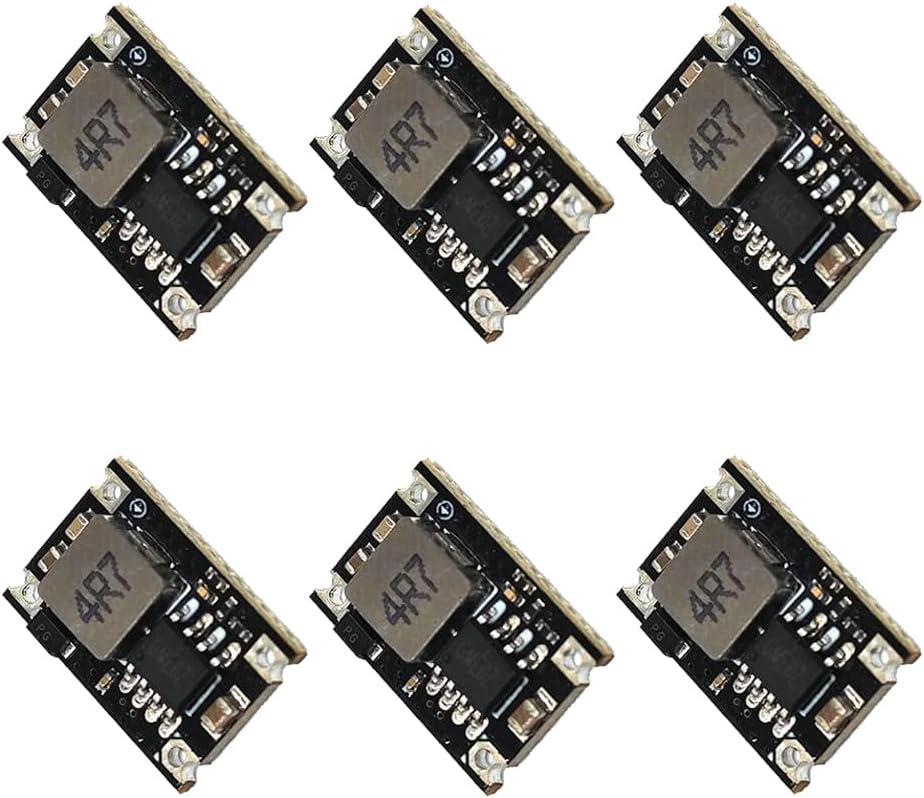
This regulator module stands out as a top choice for its wide input range and stable output. It earns a 4.6 rating due to its consistent performance across various voltage levels.
We may earn a commission when you buy through this link, at no additional cost to you.
It accepts inputs from 4.5V to 24V, making it versatile for batteries and mains adapters. The low ripple ensures sensitive components like sensors and microcontrollers receive clean power.
While it handles inductive loads well, adding a diode and capacitor for motors is recommended to prevent back EMF damage. The compact size requires precision during soldering.
Buyers seeking a reliable power solution for multiple circuits will find this value pack ideal. Its balance of price, performance, and flexibility makes it our overall recommendation.
Supporting 4.5V to 24V input, this module adapts to diverse power sources including 12V car batteries and 24V industrial supplies without extra conversion.
Measuring just 17.5mm by 12mm, its tiny footprint saves board space while maintaining high efficiency through a 1MHz to 1.5MHz switching frequency.
We may earn a commission when you buy through this link, at no additional cost to you.
Offering ten units at a low cost, this pack is perfect for bulk projects or prototyping. With a 4.1 rating, it delivers reliable linear regulation for standard applications.
We may earn a commission when you buy through this link, at no additional cost to you.
The AMS1117 chip provides a fixed 3.3V output from 4.75V to 12V input. Its dual-panel design simplifies wiring for MCUs like Arduino and ESP32 boards.
Efficiency is lower than switching regulators due to heat dissipation. Current is capped at 0.8A, so avoid high-draw devices to prevent overheating during long runs.
For hobbyists needing many regulators for separate circuits, this pack offers unbeatable value. Its simplicity and low price make it a staple in any electronics toolkit.
Buying ten units together reduces cost per module significantly, ideal for multi-project builds or classroom electronics kits requiring multiple power regulators.
The straightforward three-pin layout and wide acceptance in maker communities mean datasheets and tutorials are readily available for troubleshooting.
We may earn a commission when you buy through this link, at no additional cost to you.
This module achieves a perfect 5.0 rating thanks to its robust Mini360 design and reliable performance. It excels where space and efficiency are critical constraints.
We may earn a commission when you buy through this link, at no additional cost to you.
It supports inputs up to 24V and delivers 1.8A with less than 30mV ripple. The high switching frequency allows small external components, keeping the board footprint minimal.
Inductive loads like motors need protection to prevent voltage spikes. Soldering wires to small pads may challenge beginners but ensures a neat final assembly.
Professional projects needing compact, high-current power solutions benefit most. The quality of build and consistent output justify the premium price for critical applications.
The Mini360 IC provides exceptional efficiency and heat management, enabling high output current from a tiny package without excessive cooling needs.
With ripple kept under 30mV, this regulator delivers clean power essential for analog sensors and high-speed communication interfaces.
We may earn a commission when you buy through this link, at no additional cost to you.
This converter adapts to both higher and lower inputs to produce 3.3V. Its perfect 5.0 rating reflects reliable performance in low-power scenarios.
We may earn a commission when you buy through this link, at no additional cost to you.
Inputs from 1.8V to 5V are supported, ideal for battery-powered devices where voltage drops. However, output is capped at 100mA, limiting its use to small loads.
The dual-mode function is rare in this price range, adding flexibility. It works well for sensors or LEDs but fails for microcontrollers drawing high bursts.
Choose this when working with single-cell batteries needing a boost. Its accuracy and versatility make it a niche but valuable tool for portable low-power electronics.
Unlike standard buck modules, this converter can boost voltage when input drops below output, ensuring consistent 3.3V from depleted batteries.
Designed specifically for low current demands, it prevents waste in applications where only milliamperes are needed continuously.
We may earn a commission when you buy through this link, at no additional cost to you.
This pack offers seven reliable linear regulators for projects needing simplicity. Its 4.2 rating highlights consistent output within the specified input range.
We may earn a commission when you buy through this link, at no additional cost to you.
The AMS1117-3.3 design ensures a fixed 3.3V from 4.75V to 12V input. The three-pin layout makes it easy to solder directly onto breadboards or PCBs.
Efficiency drops as input voltage increases since excess voltage dissipates as heat. Keeping current under 800mA prevents overheating without additional heatsinks.
For static power needs where simplicity matters, this pack is solid. It supports common microcontrollers effectively and offers overheat protection for safer operation.
The fixed 3.3V output reduces component count, eliminating the need for adjustment resistors and simplifying circuit design for beginners.
Built-in overheat shutdown circuits protect the chip and connected devices during abnormal conditions or poor ventilation.
We may earn a commission when you buy through this link, at no additional cost to you.
Containing fifteen units, this pack is unmatched for large-scale production or classrooms. A perfect 5.0 rating confirms its reliability across diverse applications.
We may earn a commission when you buy through this link, at no additional cost to you.
Its minimum dropout voltage of 1V helps efficiency when input approaches output. Built-in overheat and overcurrent protection prevent damage during accidental shorts.
As a linear regulator, it dissipates heat proportional to input-output difference. Ensuring adequate ventilation remains important when powering near max current limits.
Ideal for bulk projects needing consistent power, this pack delivers quantity and quality. The accuracy and safety features ensure safe deployment in varied environments.
With a 1V minimum difference, it can regulate efficiently even as battery voltage drops close to 3.3V, extending usable runtime.
An output voltage accuracy of ±2% ensures precise power levels critical for analog components and stable communication protocols.
We may earn a commission when you buy through this link, at no additional cost to you.
This converter handles inputs up to 30V, useful for industrial or automotive use. A 3.4 rating suggests variability in performance compared to more consistent models.
We may earn a commission when you buy through this link, at no additional cost to you.
It provides 1.8A output with ripple under 30mV. PCB polarity marks reduce connection errors, protecting circuits from accidental reverse wiring during setup.
At high loads, heat dissipation becomes critical. Operating near maximum current for long periods may require airflow to maintain stable output voltage.
Those needing high-voltage input tolerance find this practical. While not perfect, its versatility and safety markings make it a solid choice for experimental projects.
Accepting inputs up to 30V allows use with 24V industrial systems without extra isolation components.
Polarity markings guide users to connect positive and ground correctly, reducing common wiring mistakes during installation.
We may earn a commission when you buy through this link, at no additional cost to you.
Designed for vehicle and solar inputs, this regulator supports 12V and 24V batteries. Units ship tested, reducing the risk of receiving defective modules.
We may earn a commission when you buy through this link, at no additional cost to you.
It delivers 1.8A peak current suitable for motors and sensors. The compact size fits tight layouts in drones, wearables, and IoT installations requiring stable power.
Output may drop slightly under peak load conditions, but remains stable for standard loads. No available ratings make long-term reliability hard to verify.
Projects involving cars or solar setups benefit from this rugged option. Its testing ensures immediate usability, making it a reliable choice for field deployments.
Supporting automotive voltage standards allows safe powering of electronics directly from car battery sources without extra converters.
Each unit undergoes pre-shipment testing to ensure it meets output specifications before reaching the customer.
We may earn a commission when you buy through this link, at no additional cost to you.
Perfect for USB-powered setups, this pack delivers 3.3V from 4.5V to 7V inputs. A perfect 5.0 rating confirms stable performance across multiple units.
We may earn a commission when you buy through this link, at no additional cost to you.
The AMS1117 chip limits output to 800mA. This suits logic-level components but not high-power devices. Keeping voltage within range prevents damage.
Operating outside the 4.5V to 7V window risks failure. Careful source selection is required to ensure safe and reliable operation.
For 5V-based systems, this regulator is simple and effective. Its ten-pack value offers great coverage for multi-device projects needing consistent voltage.
Designed specifically for 5V USB sources, it simplifies powering 3.3V logic circuits from standard USB ports.
Ten modules allow rapid prototyping or scaling up without worrying about running out of parts.
We may earn a commission when you buy through this link, at no additional cost to you.
With a 4.9 rating, this module is trusted by modelers and drone builders. Its MP1584EN chip delivers efficient power with minimal heat buildup.
We may earn a commission when you buy through this link, at no additional cost to you.
Inputs from 4.5V to 23V support diverse battery packs. It handles 1.8A well, ideal for flight controllers and motor drivers needing clean power.
Inductive loads require Zener and capacitor protection to avoid feedback spikes. Soldering wires to small pads is tricky but manageable.
For lightweight models and high-current systems, this pack provides reliable performance. The combination of efficiency and high output makes it ideal for critical mobile projects.
This switching regulator IC provides high efficiency and compact size, reducing heat generation in weight-sensitive applications.
Lightweight and compact, these modules are perfect for drones and RC models where every gram matters.
We may earn a commission when you buy through this link, at no additional cost to you.
Selecting the right regulator depends on voltage range, current needs, efficiency, and physical size.
Ensure the regulator supports your power source voltage, such as 5V, 12V, or 24V. Wider ranges provide flexibility for multiple applications.
Choose modules with input ranges matching your source to prevent damage or unstable output.
Check that the regulator can supply the maximum current your load requires. Exceeding this limit causes overheating or shutdown.
Select regulators with current capacity at least 20% higher than your maximum load.
Switching regulators are more efficient and cooler for high input-output differences. Linear types are simpler but waste more power as heat.
Use switching for battery-powered or high-draw applications and linear for simple low-power circuits.
Compact modules save space on crowded boards. Consider soldering difficulty when choosing smaller footprints for manual assembly.
Measure your available board space and ensure the regulator fits comfortably.
Low output ripple is critical for sensitive sensors and communication modules. High ripple causes instability or data errors.
Look for regulators with ripple below 30mV for stable operation.
Overheat and overcurrent protection protect your circuit from faults. This is important for unattended or remote applications.
Prioritize regulators with built-in safety shutdowns for reliability.
Standard pin spacing matches breadboards and shields. Check compatibility with your existing wiring setup.
Choose pinouts that match your MCU headers for easy connection.
Bulk packs offer better value for multiple projects. Ensure all units are tested for consistent performance.
Select packs that match your project count to avoid running out mid-build.
Connect the input voltage to the correct VIN pin, observing polarity to prevent reverse damage. Use insulated wires with secure soldering for reliable contact.
Add capacitors if required for stability, especially when driving inductive loads like motors. This reduces noise and protects your regulator from back EMF.
Avoid overloading by keeping current within rated limits. Provide adequate airflow or heatsinks for high-draw applications to prevent overheating.
Linear regulators provide low-noise output but are less efficient as excess voltage dissipates as heat. Switching regulators are more efficient and run cooler, making them ideal for high input-output differences or battery-powered devices.
Yes, but you need a regulator that steps down 5V to 3.3V. Most 3.3V regulators accept 5V as input and deliver stable 3.3V for microcontrollers and sensors.
Many include capacitors, but adding external ones improves stability, especially with inductive loads. Always check the datasheet or manual for specific recommendations.
Capacities vary from 100mA to 1.8A. Choose a regulator rated higher than your load to ensure safety and avoid overheating.
Motors generate back EMF. Add diodes and capacitors for protection to prevent voltage spikes from damaging the regulator or connected devices.
Use thin solder and steady hands. Ensure polarity is correct and heat pads evenly without damaging the PCB. Use a magnifying glass for small modules.
Yes, regulators with wide input ranges like 5V to 30V work well with solar panels. Ensure input voltage stays within the specified operating limits.
Many have built-in thermal shutdowns to prevent damage. Allow cooling time and check current loads or ventilation to prevent repeated trips.
The 5pcs 3.3V Buck Converter Module stands out as the top overall choice for its balance of efficiency, current, and input flexibility.
For budget builds, the 10 Pack AMS1117-3.3 offers incredible value without compromising basic stability. Premium needs are best met by Mini360 switching modules.
Always verify input-output compatibility and current ratings before purchasing. Check current prices on Amazon to ensure you get the best value for your project.