
NVD RTX PRO 6000 Blackwell Professional Workstation Edition
4.3Editor score
96GB DDR7 ECC memory capacity
5th Gen Tensor Cores
DisplayPort 2.1 for 8K
This guide compares the best GPU for Davinci Resolve including NVIDIA and AMD cards for editing, color grading, and 3D rendering performance.
Choosing the right graphics card is critical for smooth video editing and color grading in DaVinci Resolve. Professional workflows demand high memory bandwidth and robust CUDA or OpenCL support to handle 4K and 8K timelines efficiently.
We evaluated ten top GPUs based on architecture, VRAM capacity, cooling solutions, and real-world performance in creative applications. This list covers a range of options from budget-friendly models to high-end workstation cards tailored for professionals.
Each pick highlights specific strengths like AI acceleration, ray tracing, or multi-display support to help you match hardware to your project needs. Please note that availability and pricing can fluctuate so verify current stock before purchasing.
4.3Editor score
4.9Editor score

4.7Editor score
The following table provides a side-by-side overview of the top ten graphics cards evaluated for DaVinci Resolve workflows including memory specs and key architectural features.



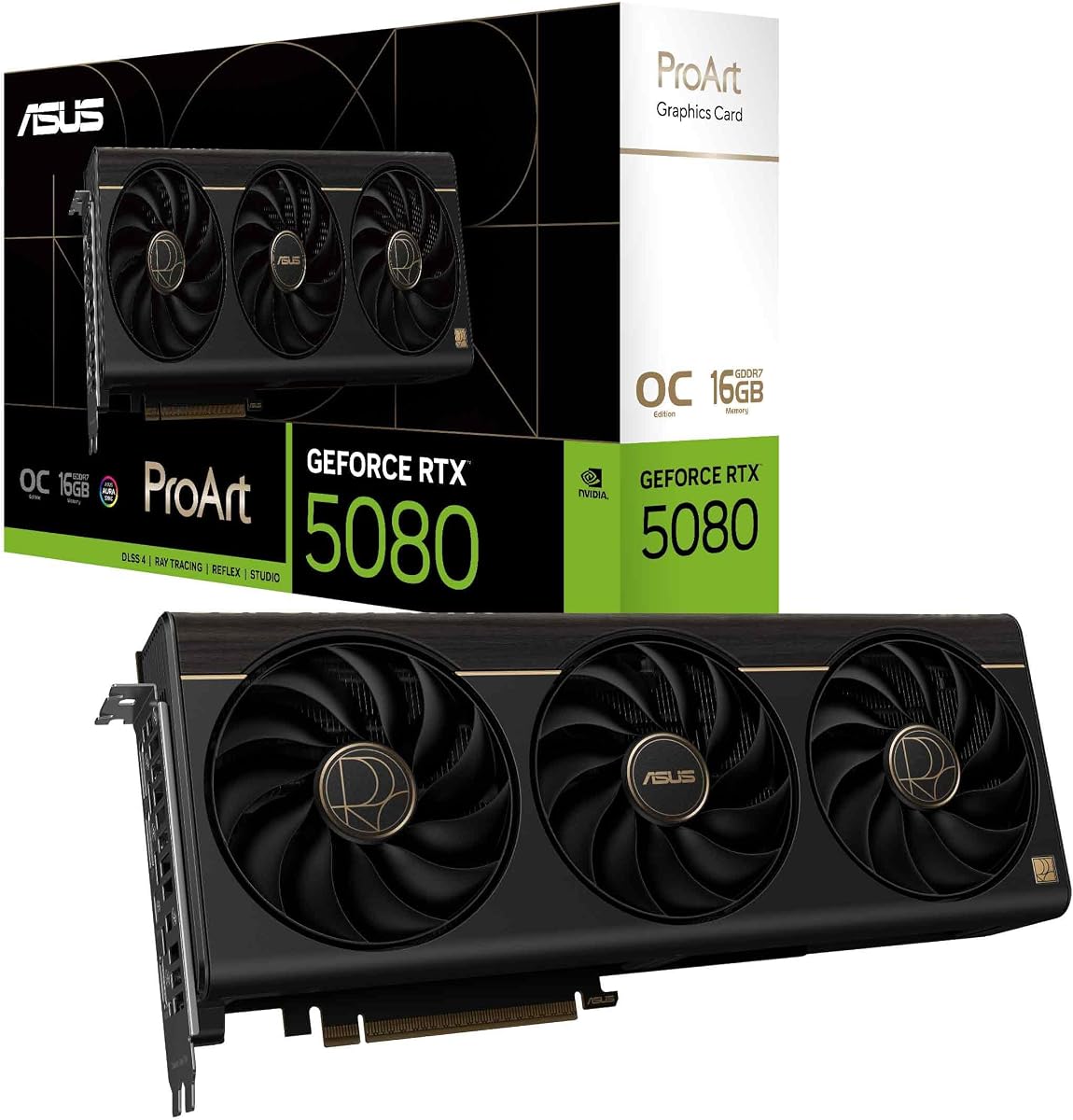
This GPU stands out as a top choice for professional video editors due to its robust specifications and reliable performance. With a high rating from users it delivers consistent speeds for complex timelines and color grading tasks.
We may earn a commission when you buy through this link, at no additional cost to you.
The NVIDIA Blackwell architecture ensures that advanced features like DLSS 4 are available for optimized rendering. The integrated USB Type-C port adds versatility for connecting external storage or devices directly to the card.
While it requires a powerful power supply the phase-change thermal pads ensure long-term stability under heavy loads. Some users note the price is elevated but the reliability justifies the investment for serious creators.
If you need a balanced card that handles 4K and 8K work without bottlenecks this model is highly recommended. Its minimalist design also fits well in professional workstations where aesthetics matter.
The USB Type-C port allows for quick data transfers without needing extra cables or hubs.
Phase-change pads maintain lower temperatures during extended rendering sessions compared to standard paste.
We may earn a commission when you buy through this link, at no additional cost to you.
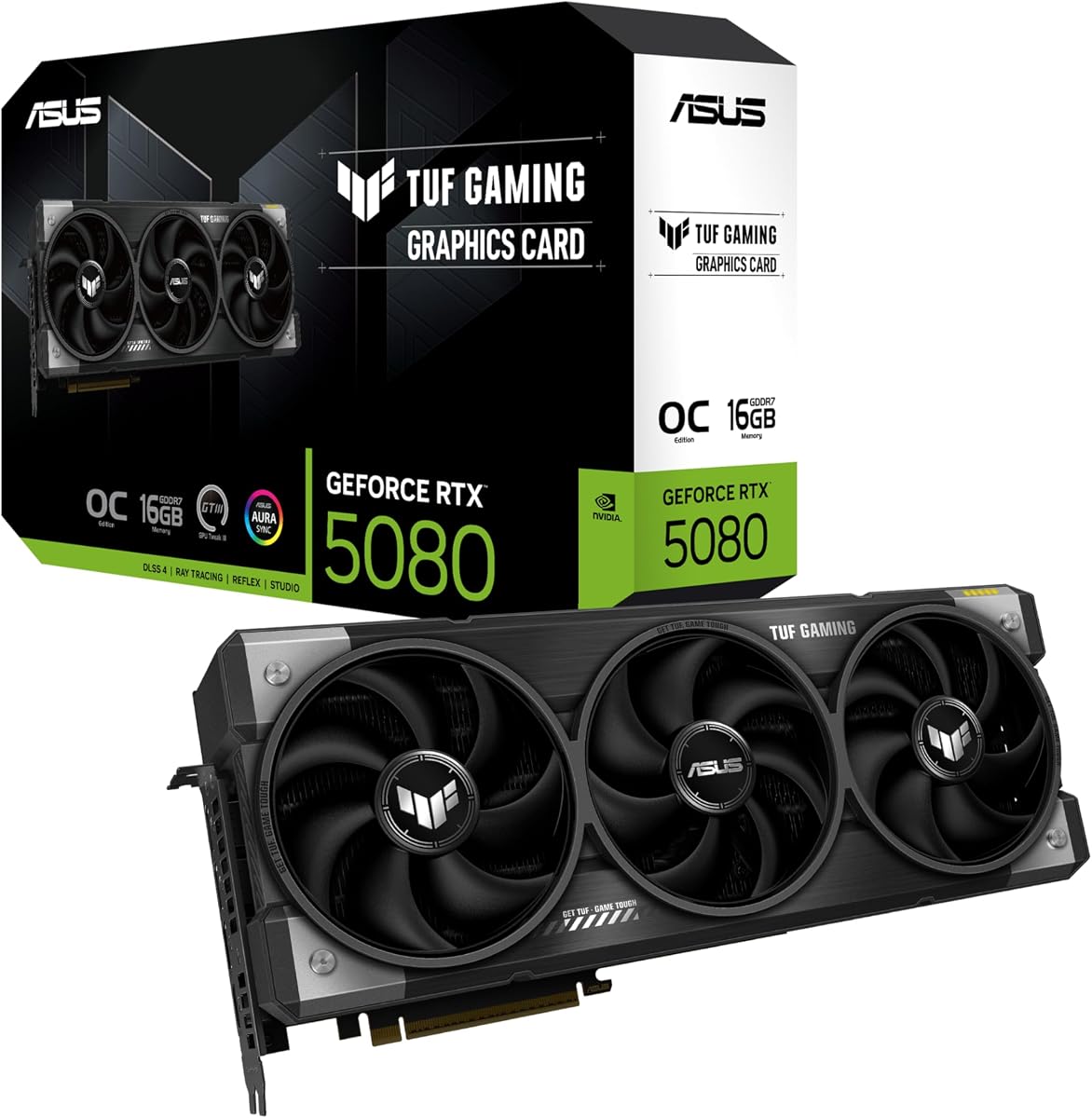
This card combines gaming durability with professional rendering capabilities making it suitable for heavy workloads. The military-grade components suggest a long lifespan which is vital for daily production use.
We may earn a commission when you buy through this link, at no additional cost to you.
Its 3.6-slot design accommodates large fans that keep the GPU cool during intensive rendering jobs. The protective PCB coating helps prevent damage from dust or moisture in workshop environments.
Users should ensure their case has enough clearance as this card is quite long. The phase-change pads are a premium touch that maintains performance over years of usage.
Ideal for editors who need robust hardware that can withstand constant use without failure. It is a solid choice for those who value build quality alongside raw speed.
Reinforced materials reduce the risk of physical damage during installation or transport.
Axial-tech fans push more air through the fins for consistent cooling efficiency.
We may earn a commission when you buy through this link, at no additional cost to you.
This is a powerhouse designed for extreme tasks like large-scale 3D modeling and heavy AI inference. The 96GB of ECC memory ensures data integrity which is critical for professional engineering work.
We may earn a commission when you buy through this link, at no additional cost to you.
With support for up to 16K displays it offers unparalleled visual clarity for detailed video editing and color correction. The double-flow-through cooling keeps performance steady even under maximum power loads.
It is expensive and comes in bulk packaging meaning you may need to source retail support separately. However for studios handling massive projects the reliability and capacity are unmatched in the market.
Recommended for enterprise environments where performance and data accuracy are non-negotiable. It is not a casual buy but a strategic investment for large production teams.
ECC memory prevents data corruption during long rendering tasks ensuring reliable output.
DisplayPort 2.1 allows connection to multiple high-resolution monitors seamlessly.
We may earn a commission when you buy through this link, at no additional cost to you.
This card offers a great blend of gaming and professional editing capabilities for users who need both. The WINDFORCE cooling system keeps temperatures low during prolonged rendering sessions.
We may earn a commission when you buy through this link, at no additional cost to you.
DLSS 4 technology helps in generating frames quickly which can speed up preview workflows in supported applications. The PCIe 5.0 interface ensures future compatibility with newer motherboards.
Some users find the fan noise noticeable when pushed to limits so quiet mode might be necessary. However the overall performance and stability make it a popular choice for mid-tier professionals.
Perfect for creators who also play games or need high refresh rate previews in their software. It is a balanced option that delivers strong results without breaking the bank.
PCIe 5.0 ensures you are ready for upcoming hardware upgrades without bottlenecking.
Multiple fans distribute air evenly across the heatsink for consistent thermal management.
We may earn a commission when you buy through this link, at no additional cost to you.
This model is ideal for smaller builds or budgets where space and cost are primary concerns. The 16GB GDDR7 memory provides enough capacity for 4K editing without significant stutter.
We may earn a commission when you buy through this link, at no additional cost to you.
The 2.5-slot design allows it to fit into cases that cannot accommodate larger graphics cards easily. Dual BIOS lets you switch between performance and quiet modes depending on your current task.
While it does not match the speed of flagship models it is highly efficient for general editing tasks. The silent operation is a plus for shared office environments where noise is a factor.
Best for entry-level professionals or those working on simpler projects with limited system space. It proves that you do not need the largest card to get done results.
Compact footprint allows installation in smaller chassis without sacrificing functionality.
0dB technology ensures fans stop at idle for a completely silent workspace.
We may earn a commission when you buy through this link, at no additional cost to you.
AMD offers a compelling alternative for those who prefer open standards over proprietary CUDA technologies. This card supports PCIe 5.0 and delivers solid performance for 4K content creation.
We may earn a commission when you buy through this link, at no additional cost to you.
The WINDFORCE cooling with Hawk Fans keeps the GPU running cool and quiet during long editing sessions. It is well-suited for workflows that do not heavily rely on specific NVIDIA tools.
Users should verify software compatibility as some professional apps may have better support for NVIDIA cards. However for general rendering and encoding the performance is impressive for the price.
A great choice for budget-conscious creators who want high specs without the premium brand tag. It provides a balanced experience for those using cross-platform tools.
High memory and speed are offered at a lower cost than competing models.
PCIe 5.0 allows for fast data transfer rates with newer systems.
We may earn a commission when you buy through this link, at no additional cost to you.
With 32GB of memory this card is designed to handle large AI models and complex rendering tasks. The blower cooler exhausts heat directly out of the case which is great for multi-GPU builds.
We may earn a commission when you buy through this link, at no additional cost to you.
The RDNA 4 architecture includes dedicated AI accelerators that speed up specific workflows significantly. It is aimed at professionals who need more memory than standard gaming cards provide.
The noise level can be higher due to the blower design so it may not be ideal for quiet spaces. Still the ability to run multiple GPUs makes it a strong candidate for render farms.
Recommended for users needing high capacity memory for large scenes or 8K projects. It is a niche product that serves specific professional needs very well.
Blower style ensures heat does not recirculate in tight multi-card configurations.
Dedicated accelerators speed up AI-based rendering and generation tasks.
We may earn a commission when you buy through this link, at no additional cost to you.
This card is built to handle multi-monitor setups with four DisplayPort outputs supporting 8K displays. It includes dedicated transcoders for fast video encoding in multiple formats.
We may earn a commission when you buy through this link, at no additional cost to you.
Intel ISV certification ensures it is validated for professional engineering and design software. The 24GB of memory provides ample headroom for complex timelines and large assets.
Driver support and optimization may lag behind competitors so performance can vary by application. Users should check specific software compatibility before purchasing for critical workflows.
Best for IT professionals or engineers requiring multiple displays and reliable hardware. It is a solid workstation tool for specific enterprise requirements.
Four outputs allow for extensive multi-screen setups without extra adapters.
Dedicated engines speed up file exports without overloading the CPU.
We may earn a commission when you buy through this link, at no additional cost to you.
Even with newer models this card remains a beast for AI and rendering tasks due to its core count. It supports Turing architecture with robust features for deep learning and graphics.
We may earn a commission when you buy through this link, at no additional cost to you.
The high number of tensor cores makes it excellent for AI-driven editing tools and plugins. It is often found in older workstations where reliability is already proven over time.
It requires a substantial power supply and generates significant heat so proper cooling is essential. While not the latest tech it is still capable for many professional tasks.
Recommended for those upgrading from older systems or needing raw compute power. It is a reliable workhorse for demanding applications.
Tensor cores accelerate neural network tasks within editing and rendering software.
RT cores enable real-time ray tracing for accurate lighting simulations.
We may earn a commission when you buy through this link, at no additional cost to you.
This card was one of the first to bring ray tracing to professional workflows at an accessible price. It is designed for stability and accuracy in creative applications.
We may earn a commission when you buy through this link, at no additional cost to you.
With 36 RT cores it handles real-time rendering tasks efficiently. It is great for users needing certified drivers for CAD or engineering software.
It lacks the latest memory speeds but it is sufficient for 1080p and 4K editing. Users should consider its age when comparing to newer options.
Ideal for entry-level professionals needing professional drivers and ray tracing. It is a good starting point for workstation builds.
Real-time ray tracing enhances visual accuracy in 3D modeling and animation.
Professional drivers ensure software compatibility and reduced crash rates.
We may earn a commission when you buy through this link, at no additional cost to you.
Selecting the right GPU requires balancing memory capacity architecture and cooling to match your specific workflow needs.
VRAM is critical for handling large textures and high-resolution timelines without dropping frames. For 4K work 12GB is recommended while 8K requires 16GB or more.
Prioritize cards with higher VRAM if you plan to work with complex scenes.
DaVinci Resolve supports CUDA for NVIDIA and OpenCL for AMD. NVIDIA often has better optimization for specific effects and AI tools.
Check which architecture your workflow relies on before purchasing.
Thermal throttling can reduce performance during long renders. Look for cards with vapor chambers or large fans to maintain stability.
Blower designs are better for multi-GPU setups due to better heat exhaust.
High-performance cards need adequate wattage and correct connectors. Ensure your power supply meets the GPU specifications to avoid instability.
Verify that you have the right cabling for your chosen card.
Some professional GPUs are very large and may not fit standard cases. Measure your case clearance before buying to ensure a proper fit.
Compact designs are available if you need to save space.
If you use multiple monitors check the number and type of ports. DisplayPort 2.1 allows for higher resolution and refresh rates.
More outputs provide flexibility for multi-screen editing workflows.
Workstation cards come with ISV certifications ensuring tested compatibility with professional software.
Certified cards may reduce crashes and improve stability in critical projects.
Modern GPUs include dedicated cores for AI tasks like face recognition or noise reduction.
Look for Tensor cores or AI accelerators to speed up smart tools.
Ensure your drivers are up to date to maximize compatibility with DaVinci Resolve features. Regularly update your graphics software to benefit from performance patches.
Keep your system clean from dust to maintain optimal airflow and cooling performance. Use compressed air to clean fans and heatsinks every few months.
Avoid overclocking unless you are experienced as it can cause instability during rendering. Stability is more important than marginal speed gains in professional work.
Yes DaVinci Resolve heavily relies on the GPU for rendering color grading and effects. A stronger GPU significantly speeds up your workflow and preview times.
NVIDIA typically offers better support for specific features like AI tools in DaVinci Resolve. AMD cards work well but may have fewer proprietary optimizations.
For 4K projects 12GB of VRAM is recommended. For 8K work you should aim for 16GB or more to ensure smooth performance.
Yes you can use multiple GPUs to increase performance and memory capacity. Ensure your motherboard supports it and your power supply is adequate.
Workstation cards provide certified drivers and stability for professional use. They are ideal if you need reliability over raw gaming performance.
CUDA cores handle parallel processing tasks essential for video encoding and rendering. More cores usually mean faster performance in supported applications.
Blower coolers are best for multi-GPU setups because they exhaust heat outside. Single card users often prefer open designs for quieter operation.
Newer PCIe versions offer higher bandwidth for data transfer. PCIe 4.0 and 5.0 ensure your GPU communicates efficiently with the CPU.
We identified the ASUS ProArt RTX 5080 as a top choice for its balance of features and reliability. The RTX PRO 6000 serves as a premium option for those needing massive memory.
Prioritize VRAM and cooling solutions to ensure long-term performance in your creative projects. Matching your hardware to your workflow requirements is key to efficiency.
Prices and availability may change so double check current listings before making a final decision. Select the model that best fits your budget and performance needs today.