
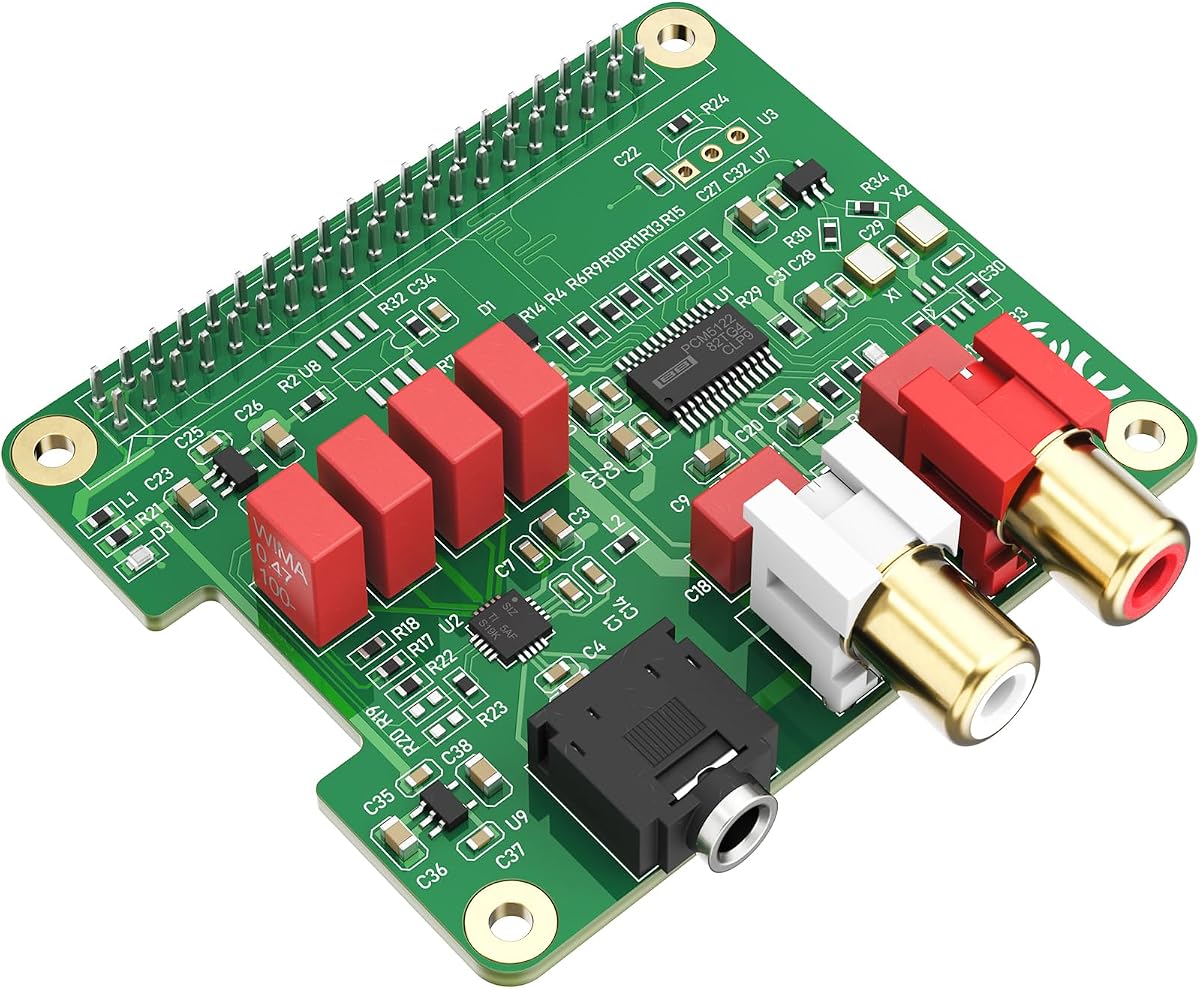
HiFi DAC Audio Sound Card Module PCM5122
4.8Editor score
I2S Interface Output
LED Status Indicators
Compact PCB Design
Discover the top DAC for Raspberry Pi options for high fidelity audio streaming. Compare features, sound quality, and compatibility for your Pi setup.
Transform your Raspberry Pi into a high fidelity music server with a dedicated digital to analog converter. These expansion boards bypass the weak internal audio, delivering crisp sound for headphones or speakers.
We evaluated ten top rated DAC hats based on audio quality, build reliability, and software compatibility. Each product was reviewed for its ability to integrate seamlessly with popular Pi music players.
Every pick highlights key specs and real world performance to help you choose the right fit. Keep in mind that availability and pricing may change, so verify details before purchasing.
4.8Editor score
4.5Editor score

4.5Editor score
Explore our side by side comparison of the ten leading DAC solutions for Raspberry Pi models. This table details core specifications to help you quickly identify the right hardware for your audio project.


The HiFi DAC HAT stands out as the top choice for most users seeking audiophile grade sound on the Pi. With a 4.5 star rating, it delivers impressive clarity via the PCM5122 chip.
We may earn a commission when you buy through this link, at no additional cost to you.
Its dual ultra low jitter oscillators ensure precise timing, resulting in a clean audio signal. The board supports 384kHz 32bit resolution and includes both RCA and 3.5mm outputs.
While it costs more than basic modules, the build quality and open source SDK justify the price. It is fully compliant with Raspberry Pi HAT specifications for easy installation.
If you need a reliable plug and play solution for high-res streaming, this is the definitive choice. It works seamlessly with Volumio, Moode, and other popular players.
The reference class engineering eliminates jitter for pristine sound reproduction across all frequencies.
Tested with major music players and OS options ensuring seamless integration into any setup.
We may earn a commission when you buy through this link, at no additional cost to you.
The DAC Mini Hat offers excellent performance for those on a tight budget. Rated at 4.2 stars, it brings the PCM5122 audio power to even the smallest Pi boards.
We may earn a commission when you buy through this link, at no additional cost to you.
Specifically designed to avoid overhang on the Pi Zero, it maintains full compatibility with larger models too. The TPA6133 headphone amp delivers powerful and clean output.
While it lacks some premium features, the sound quality challenges far more expensive standalone units. It is a fantastic entry point for DIY audio enthusiasts.
Choose this if you need a compact and affordable shield that still hits high fidelity marks. It supports OSMC, Moode, and standard OS environments effortlessly.
Specifically engineered to fit the Pi Zero without overhanging edges or blocking ports.
Pairs the DAC with a dedicated headphone amplifier for driving high impedance loads.
We may earn a commission when you buy through this link, at no additional cost to you.
The HiFi DAC Pro Hat pushes audio fidelity to its limits with the flagship ES9038Q2M converter. It holds a strong 4.5 rating for its unparalleled audio experience.
We may earn a commission when you buy through this link, at no additional cost to you.
It supports true DSD512 playback and features dual ultra-low jitter clocks for accurate sample rates. The board includes balanced outputs ideal for professional audio equipment.
Although it comes with a premium price, the performance justifies the investment for serious audiophiles. Independent clocks eliminate jitter better than designs relying on the Pi internal clock.
Opt for this if you demand bit-perfect sound and have high-end amplifiers to match. It is compatible with all major music player systems and Linux OS versions.
The ESS ES9038Q2M delivers industry leading dynamic range and total harmonic distortion performance.
Independent oscillators ensure precise timing and eliminate digital noise for crystal clear audio.
We may earn a commission when you buy through this link, at no additional cost to you.
The Digi One Hat is unique as it focuses on digital output quality rather than analog conversion. With a top 4.8 rating, it ensures accurate timing for external DACs.
We may earn a commission when you buy through this link, at no additional cost to you.
Its galvanic isolation prevents interference from the Pi power and digital signals. The board supports up to 192kHz sampling rates via S/PDIF and I2S master mode.
Since it does not convert to analog, it works best with high-quality external amplifiers. This design ensures that the audio signal remains untouched until it reaches your external gear.
Choose this if you already have a great DAC and want to clean up the signal source. It is universally compatible with OSMC, Max2Play, and other music players.
Industrial isolators keep noise out of the audio path for the cleanest digital stream possible.
Ensures the audio stream remains unmodified for external equipment to process effectively.
We may earn a commission when you buy through this link, at no additional cost to you.
This module is a simple yet effective solution for users who prefer a barebones approach. It carries an impressive 4.8 star rating for its reliability in basic playback.
We may earn a commission when you buy through this link, at no additional cost to you.
The PCM5122 chip handles up to 384kHz and the onboard LED gives you a clear status of the working condition. It leaves GPIO26 free for an IR receiver interface.
While it lacks the refined enclosure of other boards, it gets the job done efficiently. It is well suited for building your own HIFI player with minimal hassle.
Pick this if you want a lightweight and functional board for older Pi models. It is ready to work with Volumio and XBMC systems out of the box.
Red and Green LEDs provide immediate visual feedback on power and working decode status.
Uses the standard digital interface to ensure stable and low latency audio transmission.
We may earn a commission when you buy through this link, at no additional cost to you.
The RASPIAUDIO Audio DAC Hat delivers superior audio quality compared to standard USB dongles. It scores a solid 4.2 stars for its consistent performance across models.
We may earn a commission when you buy through this link, at no additional cost to you.
Thanks to a new EEPROM chip, it is fully plug and play without driver installations. The board supports 32-bit 384kHz sampling for high-resolution playback.
Its colorful and aesthetic PCB adds a unique touch to your project while providing clean stereo output. It connects easily via the standard 40-pin GPIO header.
Select this if you want an easy upgrade over USB without the complexity of coding. It is compatible with Pi 5, Pi 4, and Zero versions seamlessly.
Built-in memory makes the hat ready to use immediately without extra software configuration.
Dedicated 3.5mm jack and RCA connectors ensure flexible connection to speakers or headphones.
We may earn a commission when you buy through this link, at no additional cost to you.
The Argon BLSTR DAC earned a perfect 5.0 rating for its specialized role in noise reduction. It uses the PCM5122 digital audio codec for clear sound processing.
We may earn a commission when you buy through this link, at no additional cost to you.
Its standout feature is the included Ground Loop Isolator that prevents unwanted hum from your audio system. This ensures high quality performance even in electrically noisy environments.
It is designed specifically as a companion for the Raspberry Pi 5 ONE V3 case setup. Installation is easy through the standard 3.5mm audio port plug and play board.
Choose this if you struggle with electrical noise in your setup. It is a perfect companion for hobbyists and professionals needing a clean signal path.
Helps prevent the transmission of unwanted noise or hum to ensure audio clarity.
Designed for easy installation through the standard 3.5mm audio port on your Pi.
We may earn a commission when you buy through this link, at no additional cost to you.
The HiFiBerry DAC+ DSP is built for users who want full control over audio processing. Rated 4.1 stars, it packs a 300 MHz Digital Signal Processor for advanced tuning.
We may earn a commission when you buy through this link, at no additional cost to you.
It allows you to change parameters on the fly including room equalization and sample rates. The onboard EEPROM lets it run even without the Raspberry Pi connected.
This board is a DAC on steroids, capable of up/down sampling digital sources independently. It supports high quality asynchronous sample rate conversion for smooth transitions.
Use this if you need to tune your audio for specific acoustic environments. It works best with the official enclosures to ensure proper protection and stability.
Adjust frequency response to fix acoustic issues and optimize sound for any room.
Runs thousands of instructions per sample for complex audio manipulation in real time.
We may earn a commission when you buy through this link, at no additional cost to you.
The HiFiBerry Digi+ Standard Version excels at delivering pure digital signals to external equipment. It holds a strong 4.6 rating for its reliability in home audio setups.
We may earn a commission when you buy through this link, at no additional cost to you.
Its dedicated S/PDIF interface supports up to 192kHz and 24bit resolution. Both Optical Toslink and electrical outputs are included for versatile connectivity options.
It ensures bit-perfect output meaning the data stream is not modified in any way. This makes it an excellent choice for users with high quality digital amplifiers.
Select this if you need a dependable bridge between your Pi and external DACs. It is specifically designed for Pi 2 Model B and B+ versions.
Data stream passes through unchanged for true to source audio reproduction.
Dual connection types let you choose between optical isolation and coax speed.
We may earn a commission when you buy through this link, at no additional cost to you.
The HiLetgo PCM5102 module offers a super affordable entry into quality audio playback. With a 4.2 rating, it delivers significantly better sound than the onboard analog audio.
We may earn a commission when you buy through this link, at no additional cost to you.
It uses the PCM5102A DAC to work with the I2S interface ensuring lossless digital audio transfer. The stereo jack is already soldered onto the board ready to use.
While it is a raw module, it performs well for voice projects and simple music playback. It is a favorite among hobbyists who want to experiment without high costs.
Choose this if you need a budget-friendly module for your Pi or Arduino project. It provides a solid foundation for understanding how I2S audio works.
Provides high quality digital audio conversion at a fraction of the cost of other options.
The stereo jack comes pre-wired to the board saving time on assembly and soldering.
We may earn a commission when you buy through this link, at no additional cost to you.
Selecting the right DAC requires understanding key factors like chip quality, interface type, and case compatibility. This guide breaks down what matters most for your project.
The heart of any DAC board is its chipset. Options like PCM5122 offer balanced performance and value while ESS chips provide audiophile grade detail.
Always check the chipset model to ensure it meets your resolution needs.
Consider whether you need analog outputs like RCA or 3.5mm jacks or digital options like Toslink. Analogue is best for direct amp connection while digital suits external DACs.
Ensure the board offers the specific output connectors your equipment requires.
Not all hats fit every Pi size. While most support the 40-pin GPIO, some boards are designed specifically for the Zero or Pi 5.
Check the dimensions before buying to ensure a perfect fit without blocking ports.
A good DAC should work with popular software like Volumio Moode or OSMC. Look for boards with open-source SDKs or EEPROM for plug-and-play configuration.
Strong software support makes setup much easier for new users.
High resolution audio is a major advantage. Look for boards that support 384kHz and 32-bit PCM or even DSD files for maximum detail.
Ensure the DAC can handle the specific audio formats you stream.
Gold-plated connectors and dual oscillators indicate a better build. These features reduce jitter and corrosion ensuring long term reliability.
Prioritize boards with solid power regulation and shielding.
Many hats require specific cases for protection and ventilation. Some brands like HiFiBerry have proprietary enclosures that must be purchased separately.
Factor in the case cost and availability when selecting a board.
If you plan to listen on headphones ensure the board has a dedicated amp. This avoids weak or distorted sound from the line output.
Check wattage ratings to match your headphone impedance.
Begin by installing the hat directly onto the GPIO pins ensuring full contact. You may need spacers or a case to secure the board properly.
Connect your speakers or headphones to the RCA or 3.5mm outputs. For digital boards connect the Toslink or Coax cable to your receiver.
Install a music player OS like Volumio or Moode and configure the audio output. The DAC should be detected automatically once the drivers are loaded.
Most modern DAC hats use EEPROM chips that auto-configure without manual drivers. However some older boards may require you to edit the config file to enable I2S support.
Yes but you must choose a board designed for the smaller footprint. Some hats overhang on the Zero so check dimensions to ensure a perfect fit.
A DAC improves sound quality by removing digital noise. You control volume via software or a connected receiver since the DAC itself does not add gain.
Check your config.txt file for I2S entries and ensure the GPIO pins are clean. Also verify that your OS supports the specific DAC chip used on the board.
Most hats require a case to prevent short circuits. Some use the official cases while others fit into standard DIY enclosures so check before purchasing.
You can connect both but usually only one acts as the default audio output. Use software settings to route sound specifically to the DAC interface.
The HiFi DAC HAT stands out as the top choice for most users needing reliability. Its dual oscillators and universal compatibility make it a standout option.
For tighter budgets the DAC Mini Hat offers excellent sound and compact design. Serious audiophiles will appreciate the high-resolution capabilities of the Pro Hat.
Remember to verify case compatibility before buying any of these boards. Check current availability to ensure your project is ready to go.